The Dreaming City
From CatCraft Wiki
Contents
- Summary
- Background
- The story
- Lovecraft’s Dream Cycle
- Dream logic
- How to start
- The five nights
- The Falling
- The Endless Corridor
- The Inverted Street
- The Shrinking Library
- The Quiet Rooms
- Ulthar, City of Cats
- The Echo Caves
- The Night-Gaunts
- The Watchers
- The Gallery
- The Orrery
- The Shifting Streets
- Reflections
- Firefly Lake
- Mirror Hall
- The Toy Box
- Deeper Slumber
- The Windswept Isles
- The Seventy Steps
- The Eye of the Dreamer
- Hints, skips and medals
- Playing with friends
- Clans
- Difficulty
- Dream Fragments and shards
- The Dream Meter
- The Awakening
- Act by act
- The Dream Shop
- Dreaming City Crate
- Nightmare Crate
- Kadath
- The Plateau of Leng
- The Night-Gaunt Flight
- The Onyx Castle
- Nyarlathotep’s Throne
- Leaderboards and medals
- Custom shaders
- What they are
- Why the event uses them
- Where they are used
- How they were made
- Without the pack, and on Bedrock
- The story, explained
- Development
- From five dreams to fifteen
- Builds
- Playtesting
- Bedrock Edition
- A different kind of event
- Further reading
Summary
The Dreaming City is CatCraft’s November 2026 event. Something beneath the realm is dreaming, and its dream is leaking through. Players fall asleep with /dream on the Red, Green or Blue realm and play through five nights of dreams, fifteen in all, each one a different puzzle, parkour or stealth game built around a single strange rule.
The event opened on 8 November 2026. It draws on H.P. Lovecraft’s Dream Cycle, above all The Dream-Quest of Unknown Kadath and The Cats of Ulthar, and mixes places from those stories with dreams of its own. Around the nights sit three difficulties, hidden Dream Fragments, a Dream Meter that each realm fills together, a finale called the Awakening, a shop with two event crates, and a last game, Kadath, for those who finish everything else.
Every dream can be played alone or in a group of up to four. All of the builds were made by Xizzdot, CatCraft’s builder.
Background
The story
Below the realm drifts a city built from every dream ever dreamed there. Its Dreamer is stirring, and the dream has started to leak into the waking world. Players fall into it, find their way through its nights, and gather the fragments it has shed. Every fragment found brings the Dreamer closer to waking. Who or what the Dreamer is stays unanswered until the Awakening.
Lovecraft’s Dream Cycle
The Dream Cycle is a group of stories H.P. Lovecraft wrote mostly in the 1920s about the Dreamlands, a world that can only be reached in sleep. They are quieter and stranger than his better known horror stories, closer to fairy tales told by someone who has had bad dreams.
The longest of them is The Dream-Quest of Unknown Kadath, written in 1926 and 1927 and published after his death. Its hero, Randolph Carter, dreams three times of a marvellous sunset city and is snatched away each time before he can enter it. He sets out across the Dreamlands to find the gods on unknown Kadath and ask them for it. To get there he walks down the seventy steps of light slumber, passes the Gate of Deeper Slumber, is helped by the cats of Ulthar, is carried off by night-gaunts, crosses the plateau of Leng and finally stands in the onyx castle on Kadath before Nyarlathotep, the Crawling Chaos.
The event follows the same road. The nights borrow Ulthar, the night-gaunts, the Seventy Steps and the Gate, and the game that comes after the nights is Carter’s journey from Leng to the throne room. The Cats of Ulthar, a short tale from 1920, gives the second night its town, where no man may kill a cat.
Nobody needs to have read any of it to play. The dream tells its own story as it goes, and players who do know the books will spot the places as they reach them.
Dream logic
The other dreams are the event’s own. They come from the way dreams actually behave rather than from any book. A hallway that never ends. A street you can walk on from both sides. A room where you are suddenly very small. Something that only moves when you look away.
Each dream takes one rule like that and builds a whole game on it. The dreams are short, a few minutes each, and no two play the same way, so a night feels like three different dreams rather than three levels of one game.
How to start
- Join the Red, Green or Blue realm.
- Java Edition players should use the CatCraft texture pack, version 12.8.4 or newer. Get it from the #texture-pack channel on our Discord. The dream’s sky and many of its effects are part of the pack, and /dream tells you if yours is missing or out of date.
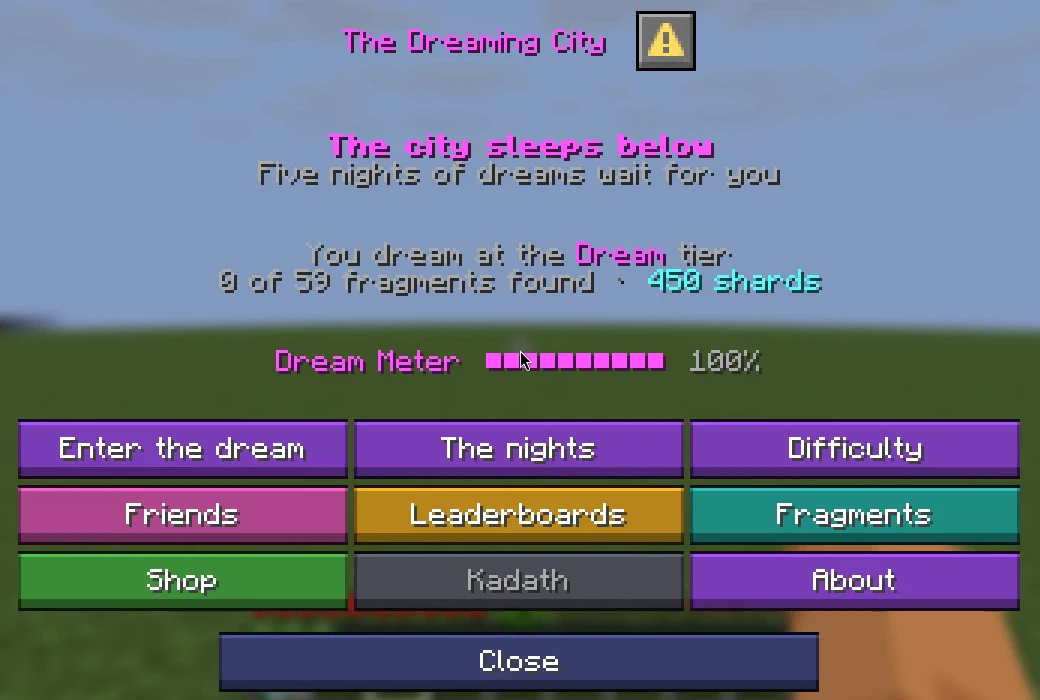
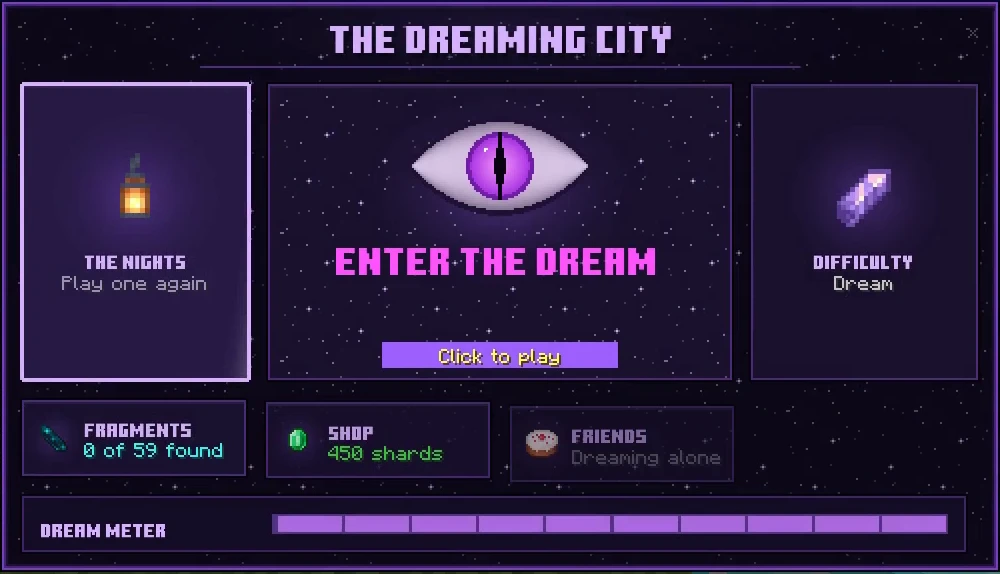
- Type /dream. This opens the event menu.
- Click Enter the dream.
| Command | What it does |
|---|---|
| /dream | Open the event menu. |
| /dream join | Enter the dream straight away, from where you left off. |
| /dream leave | Wake up. Your place in the night is kept. |
While you dream, your inventory, armour and off-hand are stored safely and the dream is played with empty hands. Everything is given back the moment you wake, however you wake, including logging out or a restart. Nothing in the dream can hurt you or cost you an item. You can still message other players, but other commands wait until you’re awake.
If you leave or log out part way through a dream, you carry on from your last checkpoint when you come back.
The five nights
The dream is played over five nights, with three dreams in each. Finish a night and you wake at home with a medal for your time. Once you have reached a night you can play it again whenever you like from The nights in the menu.
The nights are ordered so that each one asks for something different. The first teaches you that the dream does not follow the usual rules. The second is slow and quiet. The third is about being watched. The fourth plays with reflections and memory. The fifth goes down the stair from the books and ends under the Dreamer’s eye.
The Falling
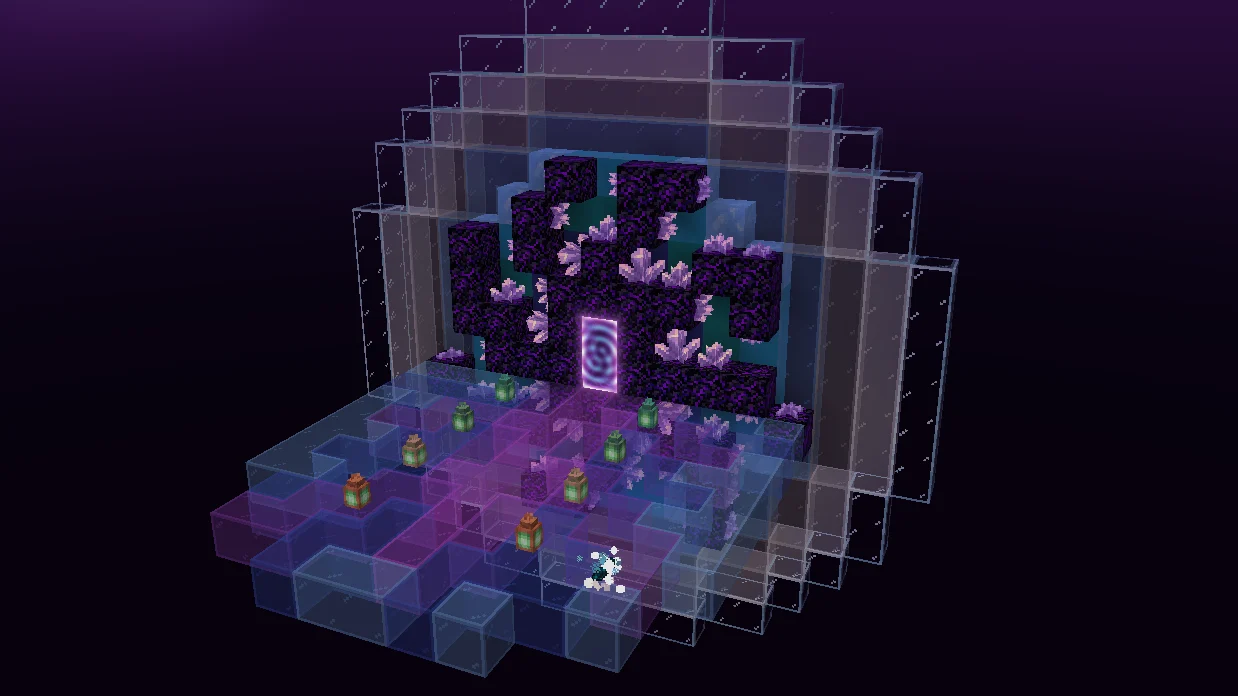
The first night begins with the fall itself. You drop out of the waking world and land in front of an arch, and the night starts when you walk through it. On Java the fall is a shader. The edges of the screen close in from purple to black and stars streak past, and above the Landing the dream’s own sky takes the place of the usual one. Its three dreams each break one thing players take for granted, which are distance, gravity and size.
The Endless Corridor
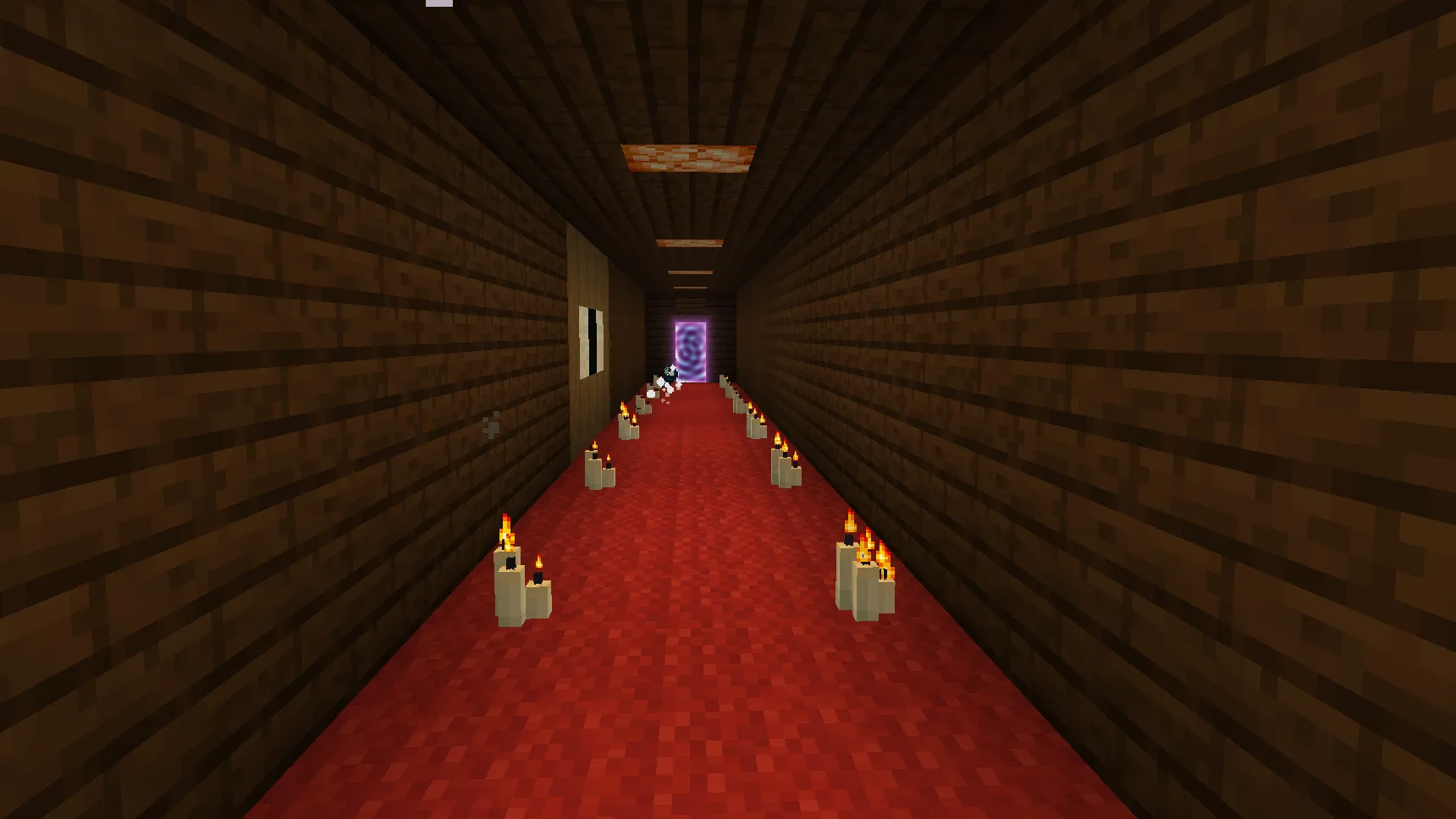
A hallway of doors and lamps that brings you back to where you started. Each time round it is a little less ordinary. A light flickers, a candle goes out, something is standing where nothing stood before. The way out is to notice what the corridor is doing and act on it.
The Corridor is first because it needs no skill at all, only attention. It is there to make new players slow down and look around, which every later dream depends on. Everything strange in it is shown only to you, so two friends walking the same corridor each see their own version and can compare afterwards.
Shader. Each time the corridor loops, the screen blinks dark and a ripple sweeps out from the middle, stronger every time round. The door at its end is a rippling sheet of light, like disturbed water, and every doorway in the event after it is drawn the same way.
The Inverted Street
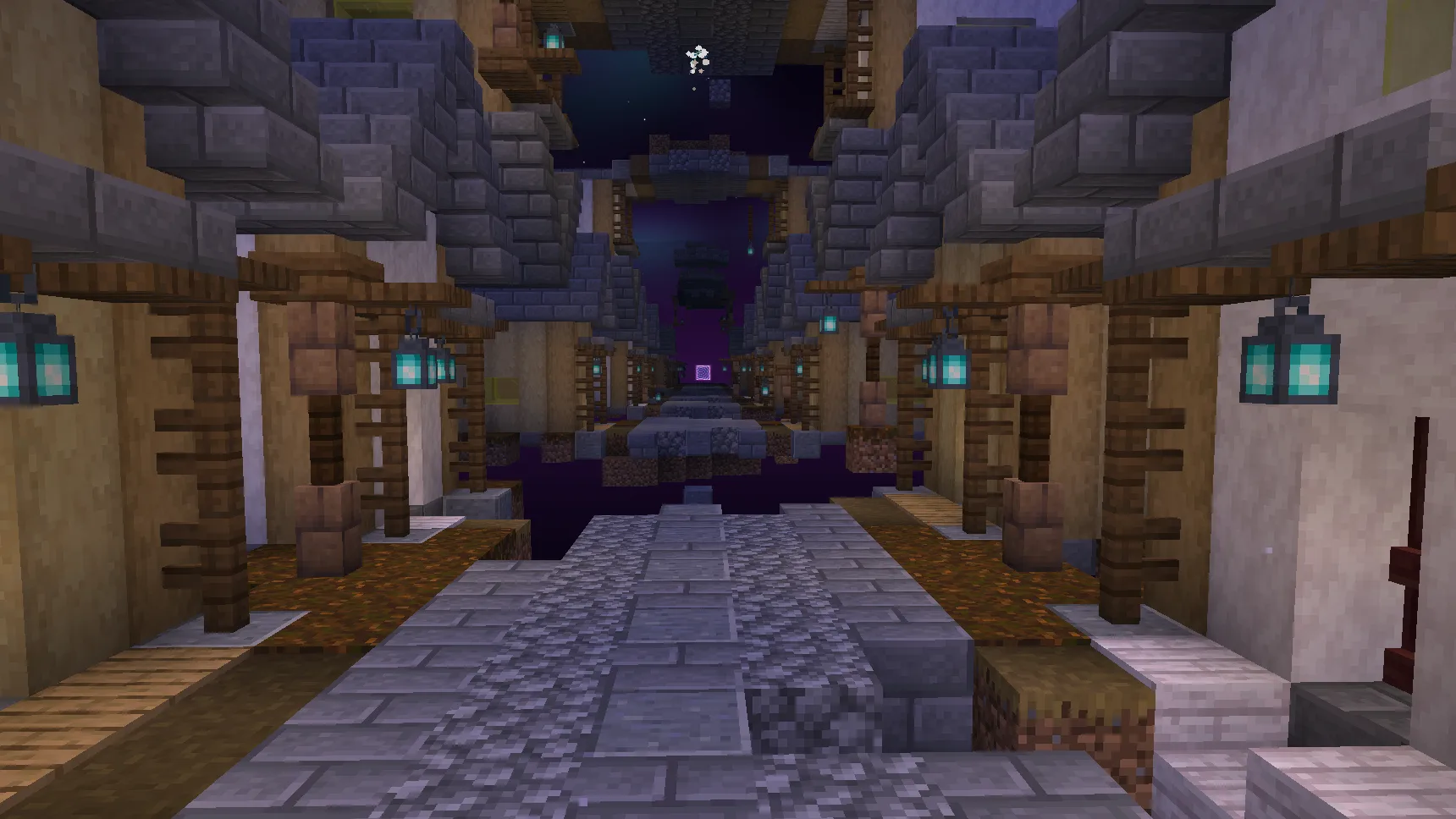
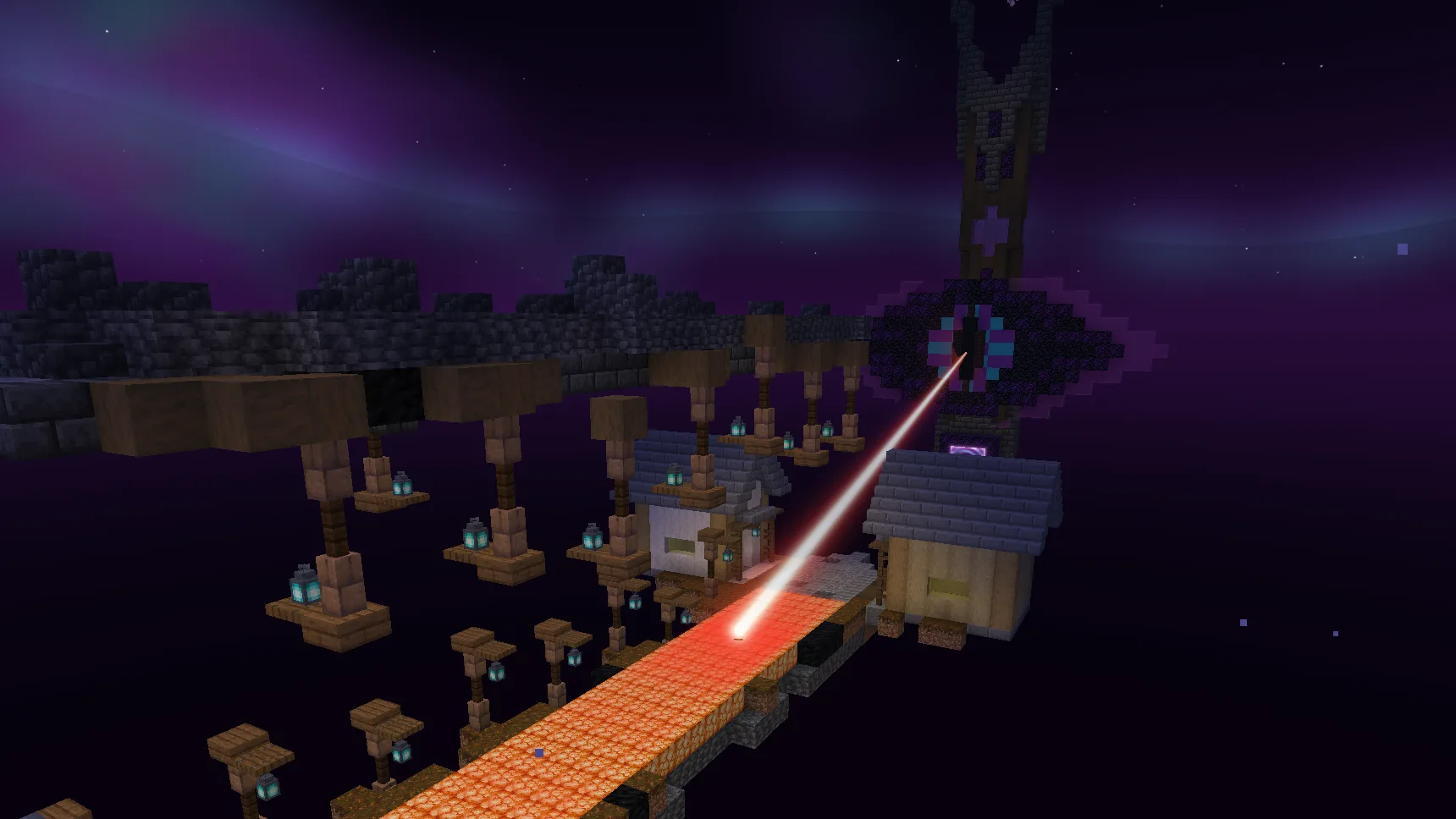
A broken street hangs in the void with a second street above it, upside down. Tap sneak to flip gravity and fall up onto the other one, then cross the gaps between the pieces to reach the clock tower you can see from the start. Something from the Corridor follows you down the street, parts of the road crumble under your feet, and near the end a great eye sweeps a beam of light between the two streets.
This dream replaced an earlier one. The first design was an upside-down plaza, and in testing it turned out to be a large room with nothing to do in it. Only the gravity flip was fun, so the plaza was thrown away and a new dream was built around the flip alone. That set a rule the rest of the event kept. Every dream needs a goal you can see from the start, a skill you get better at, and something that pushes you along.
Shader. The eye’s gaze is drawn as a real beam, running from the clock tower down to the street it is watching. The street about to be lit glows gold as a warning, and the lit one burns red. When the clock is stopped the whole screen frosts over, and colour floods back when time starts again. At the tower the clock strikes twelve, and each stroke closes the dark in a little further before the Library opens.
The Shrinking Library
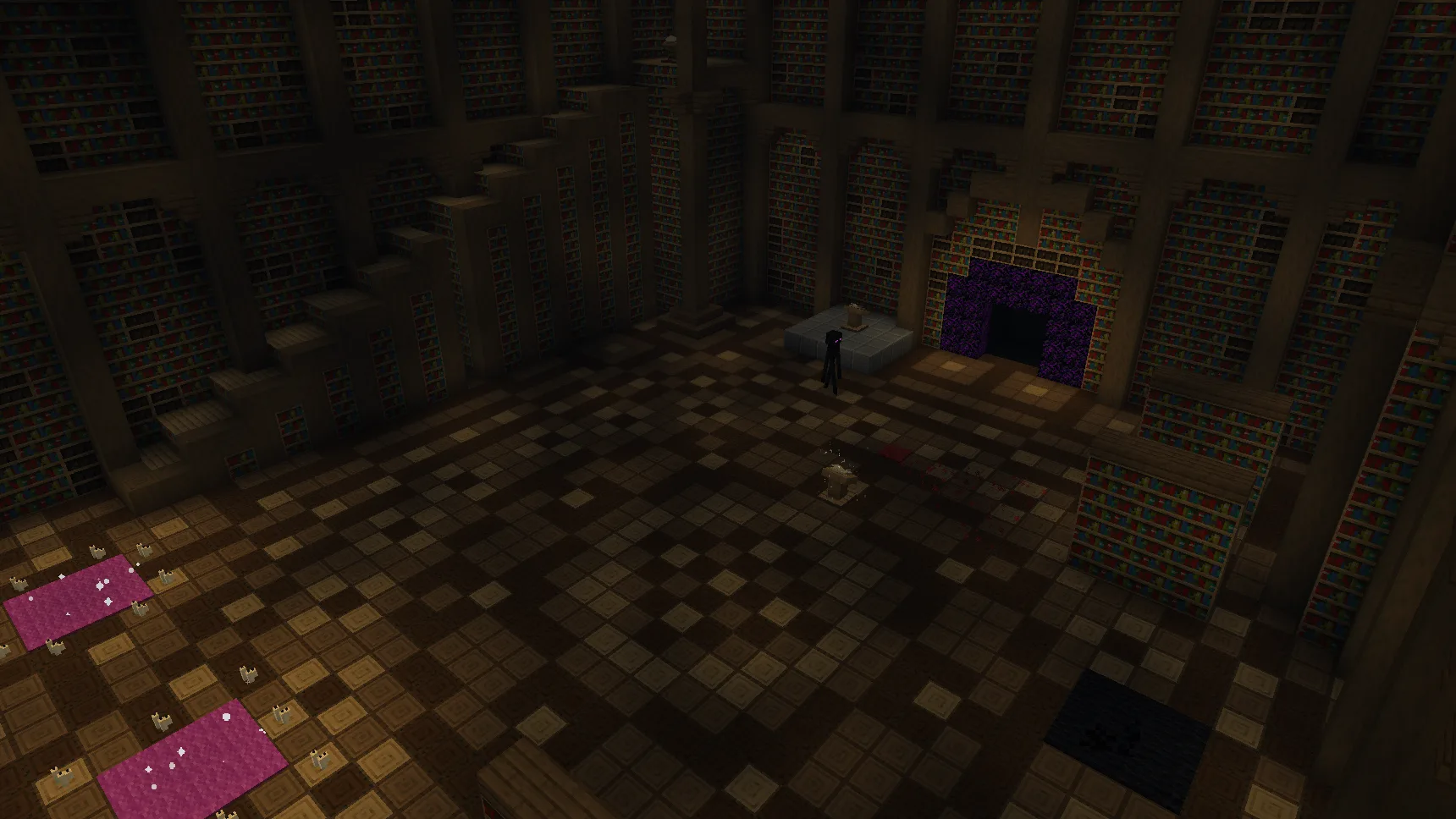
Inside the clock tower is a library with five lost pages to find. Ink pools shrink you and rings of candles grow you back. Small, you fit through gaps and the Librarian cannot see you, but you cannot jump. Big, you can climb the shelves, and the Librarian sends you back to the door if you walk into its gaze.
The Library is the first stealth dream and the first with something to collect. Changing size will remind many players of Alice in Wonderland more than of Lovecraft, and it comes back at the very end of the event, in the onyx castle on Kadath.
Shader. Shrinking is something you see as well as feel. Tendrils of ink creep in from the edges of the screen as you shrink and leave a thin ink frame for as long as you stay small. Growing back is a warm burst of candlelight from the middle.
The Quiet Rooms
The second night slows down. Nothing chases you in the first two dreams, and all three are about finding your way by looking and listening. It is also where the event first steps into Lovecraft’s Dreamlands.
Ulthar, City of Cats
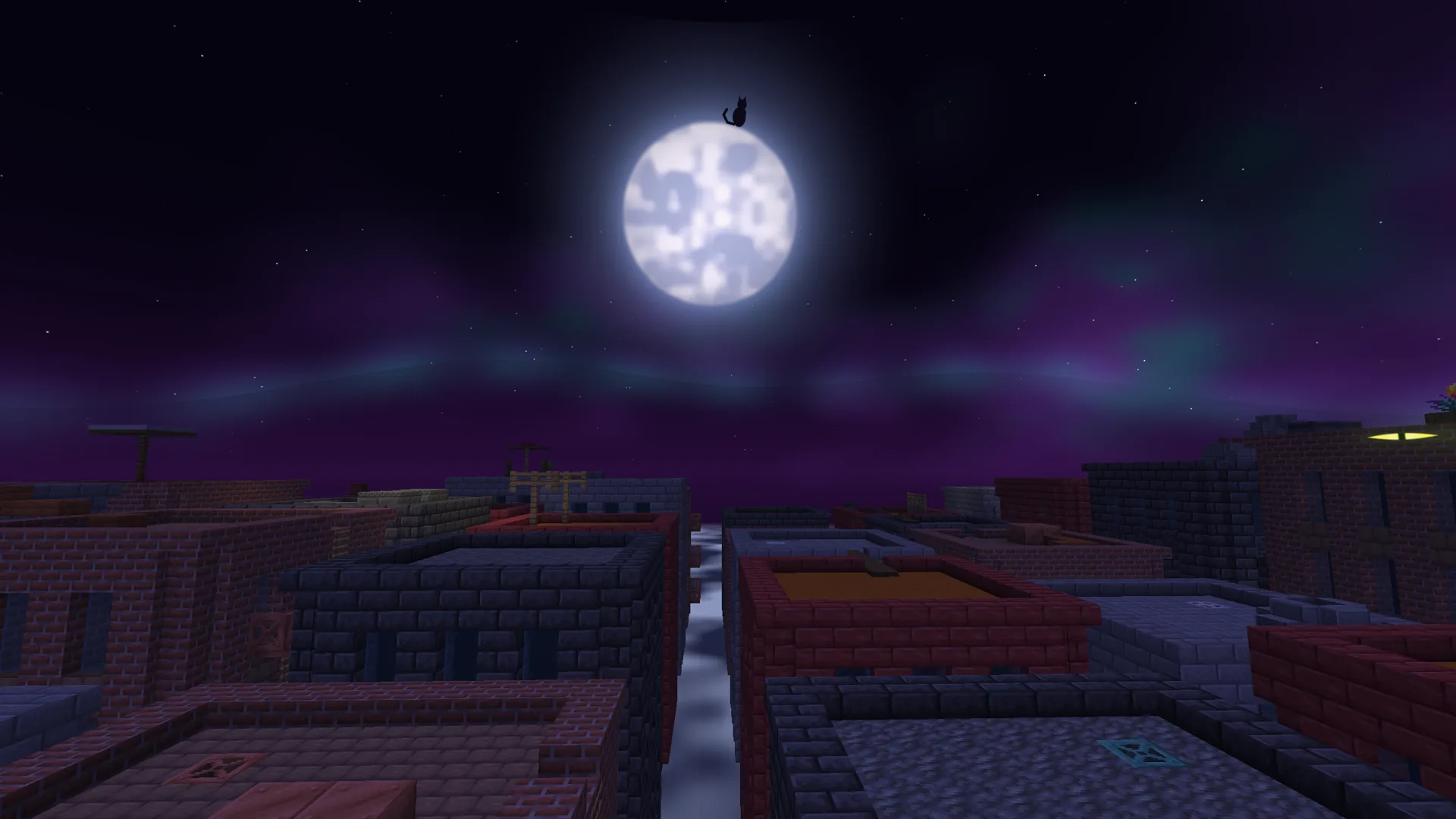
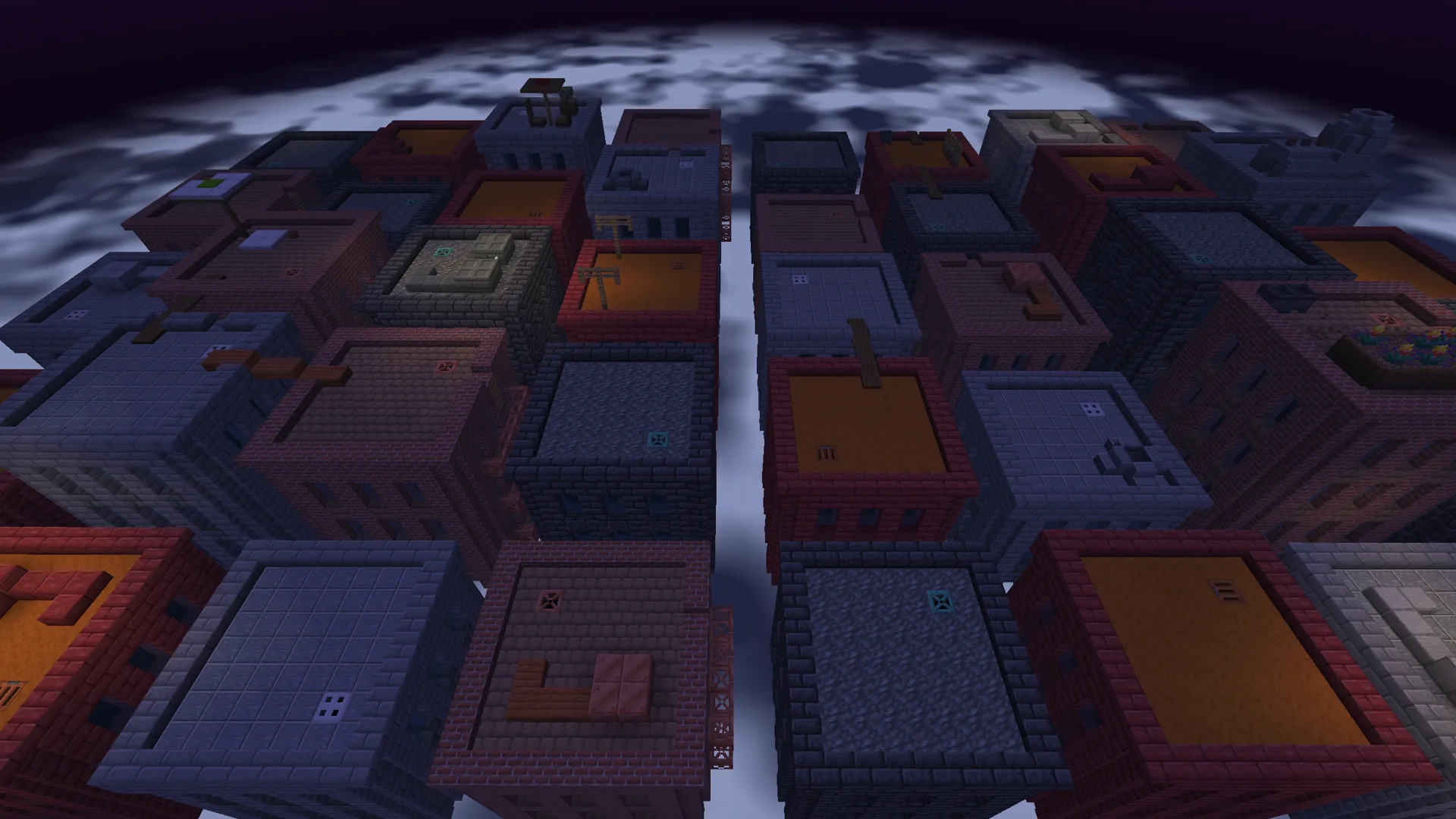
A town of rooftops under a huge moon, with nine lost cats hidden on chimneys, on roof edges and down in the alleys. Each cat you find follows you, and tapping sneak makes the newest one mew toward the next.
Ulthar comes from The Cats of Ulthar, in which an old couple who trap and kill their neighbours’ cats meet a fitting end, and the town passes its one famous law, that no man may kill a cat. In the Dream-Quest the cats of Ulthar are Carter’s friends, and at one point they cross the sky in a great leaping army to rescue him. Here they are the gentlest dream of the event. There is no way to fail it, and falling off a roof only costs a climb back up. It opens the night so that a night which ends in real danger begins with something kind.
Shader. Ulthar’s rooftops stand in a sea of moonlit cloud that drifts slowly out to the horizon, and the cloud is a shader. So is the oversized moon, which has a cat sitting on its rim with its tail swaying. A lost cat in the dark shows as a pair of glinting eyes, large enough to spot from across the town.
The Echo Caves
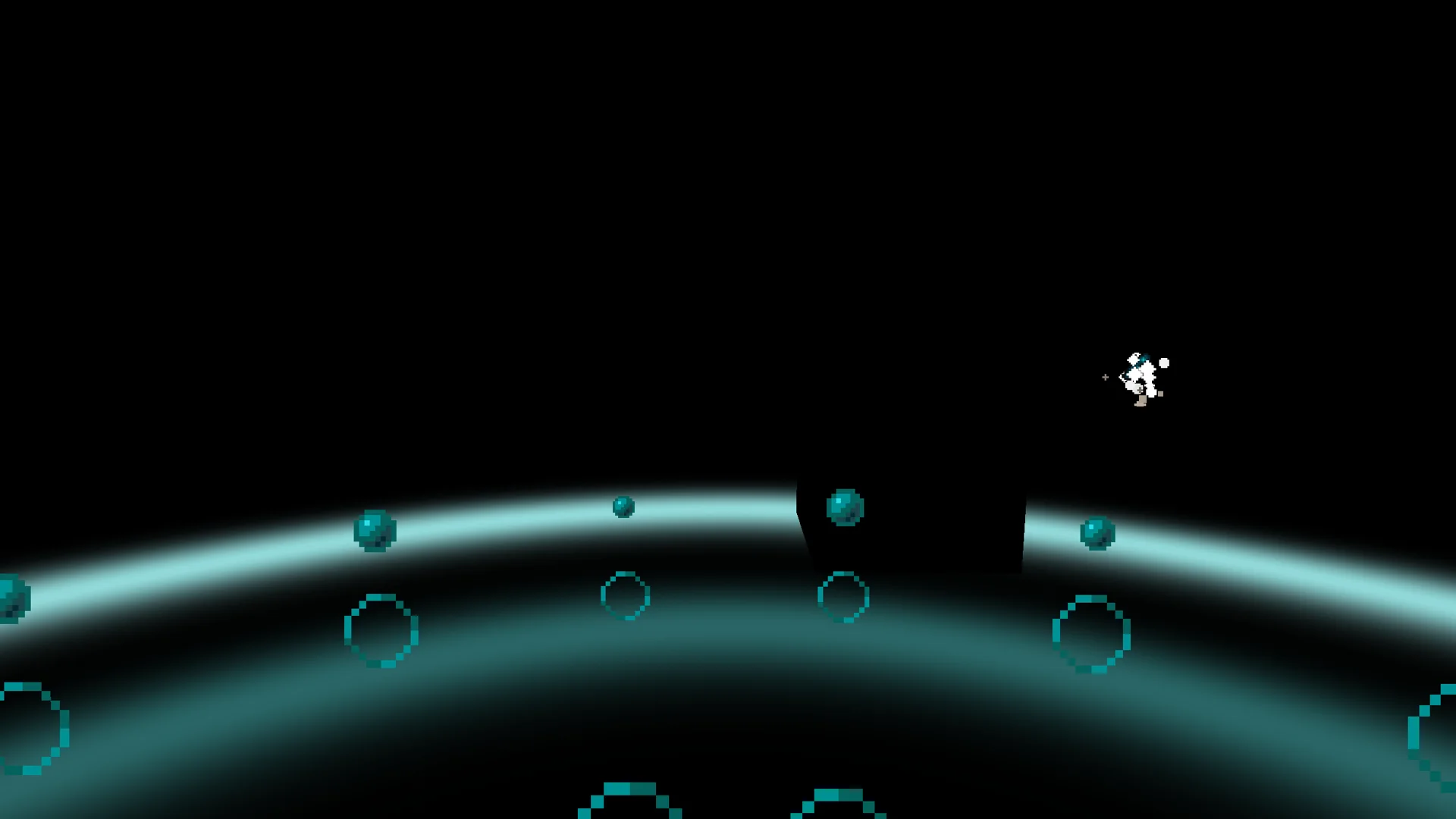
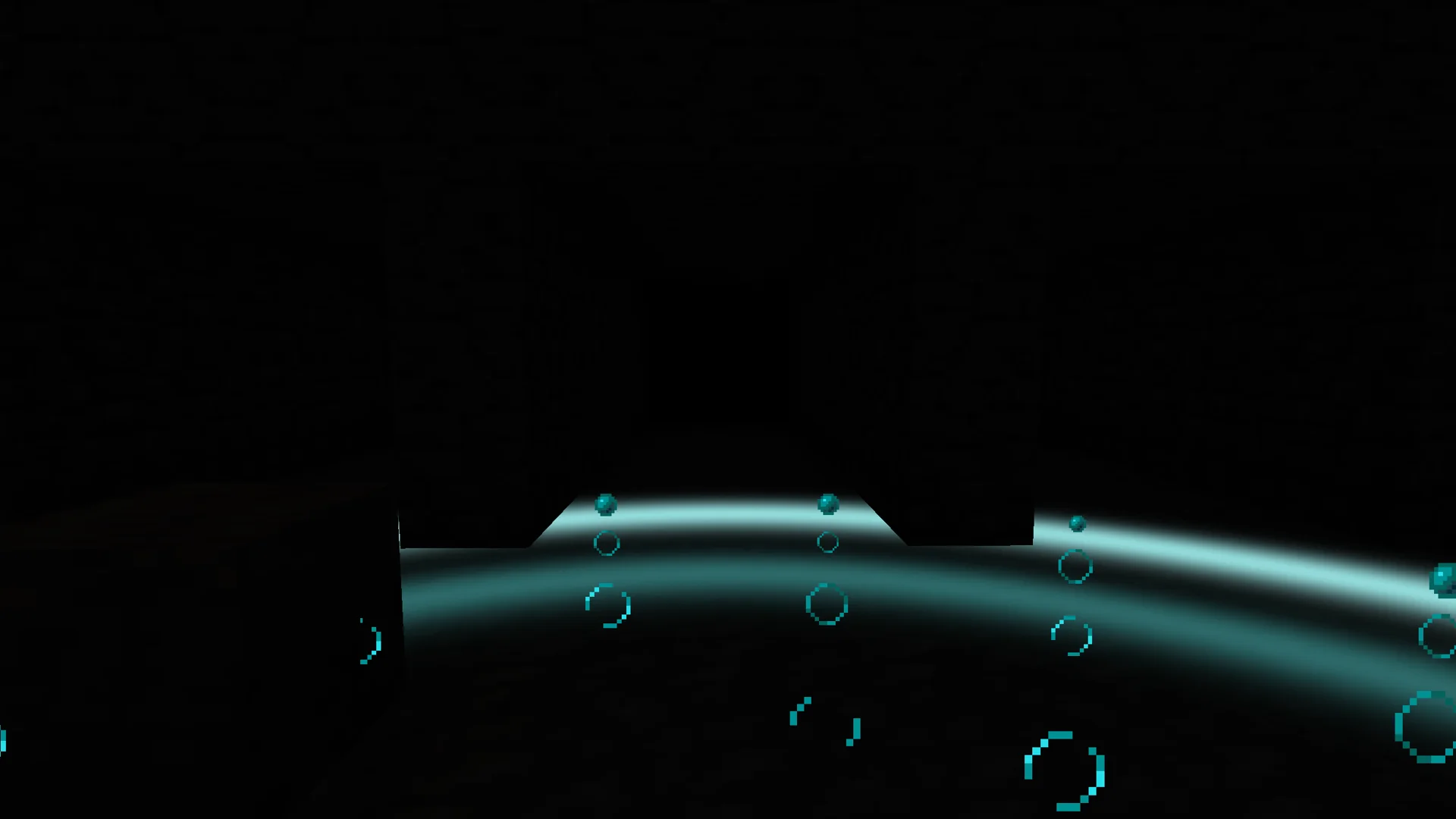
Five caverns in complete darkness. Each has three tunnels leading on and only one is real. Tap sneak to send out an echo and the caves answer. Go far down a wrong tunnel and the roof comes down.
The caves were first designed around sound alone, with the true tunnel answering from its own direction. Testing showed that most players could not tell left from right by ear, so the answer was rebuilt as light. The true tunnel now glows for a moment when the echo reaches it, and the sound is there for atmosphere. On harder difficulties the glow is shorter and fainter.
Shader. The echo is a thin ring of light that rolls out along the cave floor from where you stand, and the true tunnel’s answer is light as well. On Java this is the whole dream. There would be almost nothing to see without it.

The Night-Gaunts
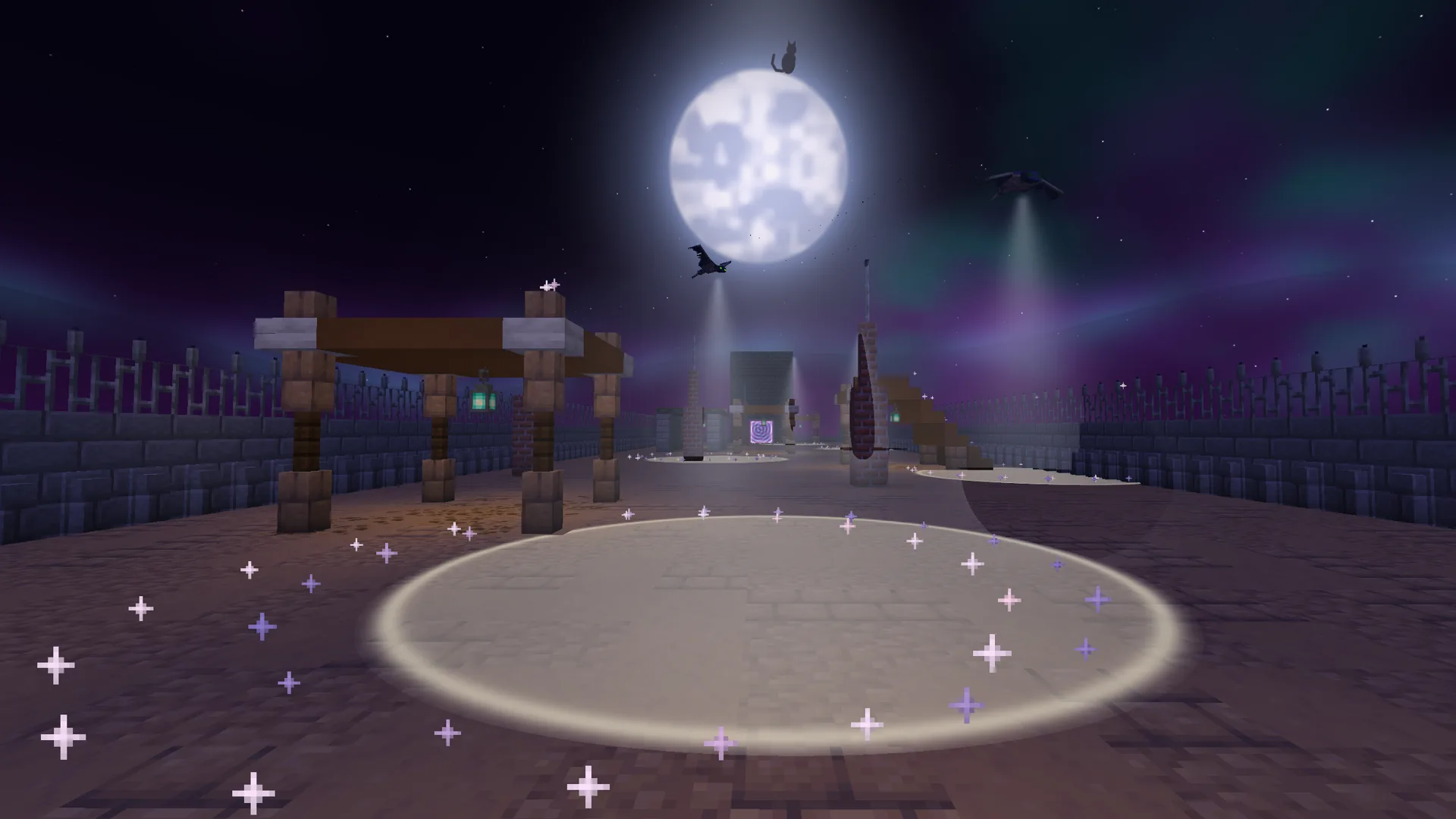
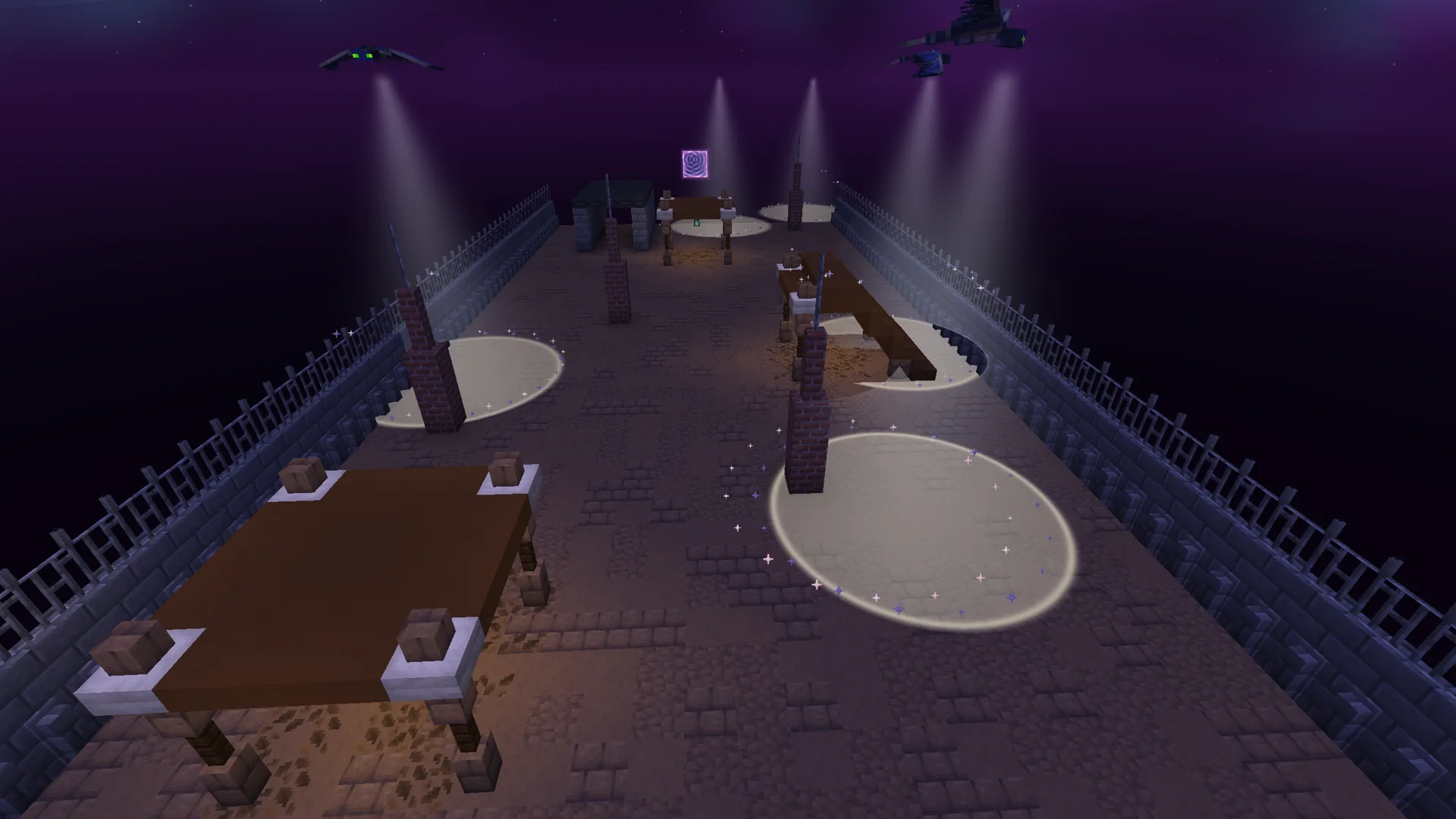
A long yard of rooftops under the moon, with faceless winged shapes circling overhead. Each one throws a circle of light onto the roofs below. Step into a circle out in the open and you are carried back to the last shadow. Awnings and covered alleys hide you, and the yard’s bell pulls every beam toward it for a few seconds.
Night-gaunts are Lovecraft’s own nightmares. He wrote that they haunted his sleep when he was a small child, thin black things with wings, horns and no faces, which snatched him up and carried him through the air. In the Dream-Quest they do the same to Carter. In the event they come twice. Here they hunt you, and in Kadath one carries you.
Shader. Each night-gaunt’s searchlight is a cone of light from the flyer down to its circle on the roofs. It stops on the awnings, so you can see exactly where the shadow is safe. When the bell rings, every cone swings to it.
The Watchers
In the third night something is always looking at you, or you at it. The three dreams turn on sight and timing.
The Gallery
Four long halls of statues that move only while nobody is looking at them. Keep them in view and they stay still. Turn your back on one that is close and it comes for you. The halls add pillars to hide the statues behind, then failing lights, then sheer numbers.
Children know this game as statues, or grandmother’s footsteps, played here from the other side. In a group it becomes a team game, because anyone’s eyes will hold a statue, and a group can cover a hall by agreeing who watches what. The Gallery opened with three halls. A tester walked through all three in 27 seconds, so a fourth was added and the statues were taught to lunge.
Shader. When a statue is close behind you, a heartbeat pulses at the edges of the screen, two thumps to a beat, and it grows stronger as the statue gets nearer. In the third hall the lights fail with a stutter, go out, and stutter back.
The Orrery
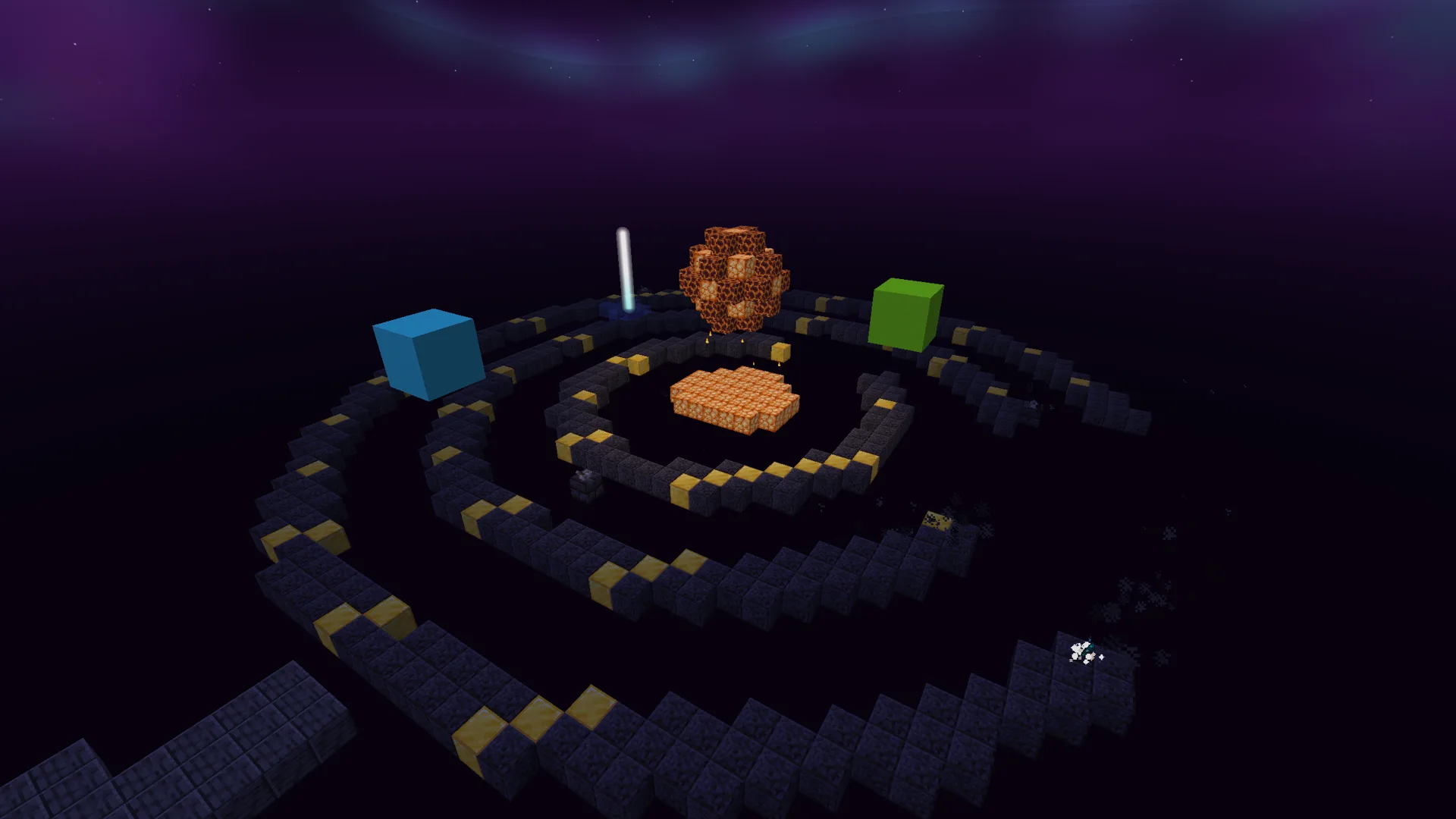
Three ring walkways hang around a sun, high over the void, each with a planet circling it. A shadow sweeps round every ring like the hand of a clock, and the floor under the shadow is not there. The bridge to the next ring only appears while that ring’s planet stands over it.
An orrery is a clockwork model of the solar system, and this dream is the event’s piece of pure timing. Nothing in it hunts you. Everything turns at its own steady speed, the same for everyone in the dream, and you learn the machine and move with it. It sits in the middle of the night as a breather between two dreams that chase you.
Shader. While a bridge is there, its planet’s light falls on it in a bright shaft, so you can read from anywhere on a ring which bridge is open.
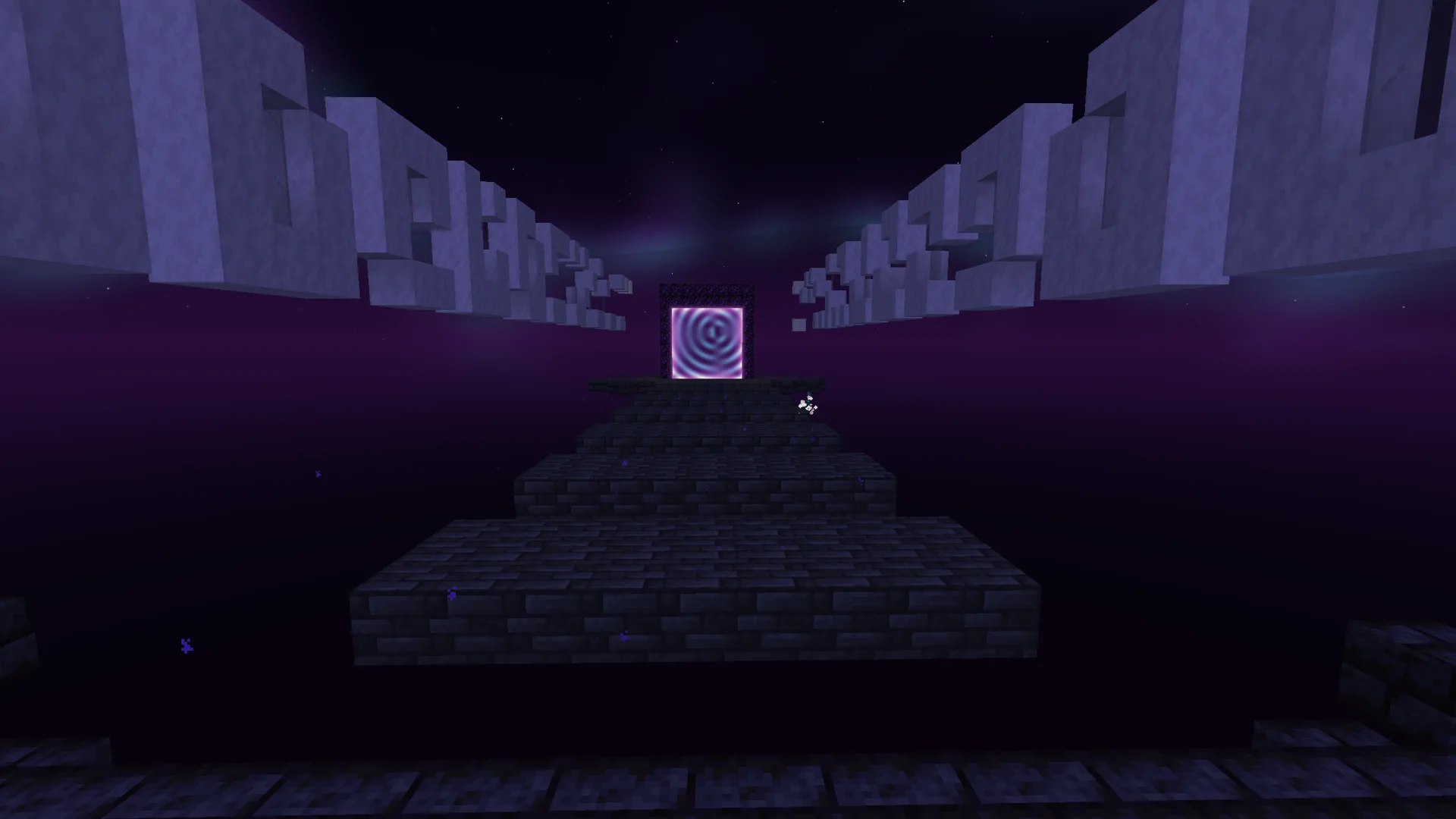
The Shifting Streets
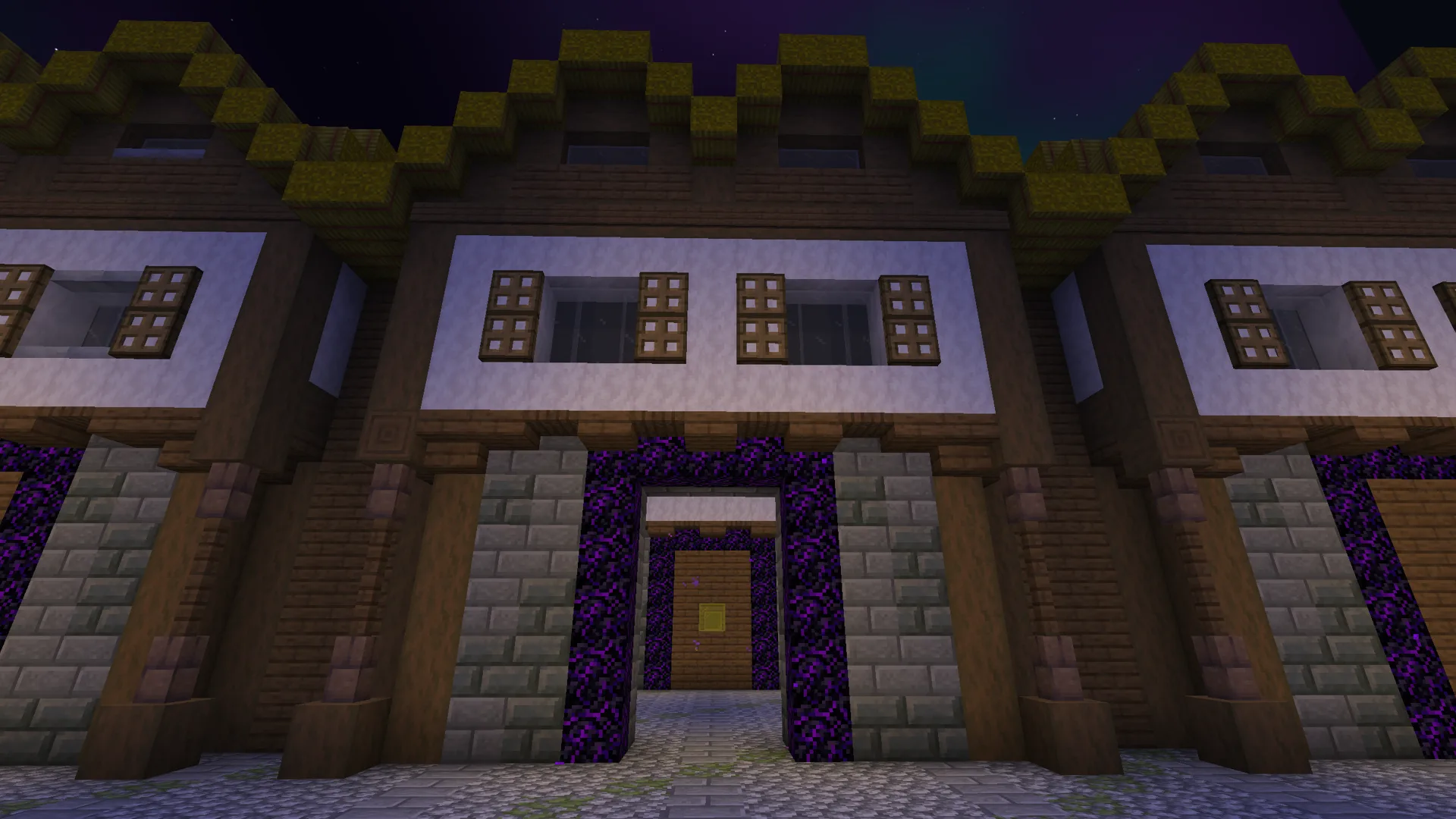
A city that will not hold still, in three districts. In the first, walls of houses cross the street and their gateways open and close as the city shifts. In the second, the gap in each wall slides along it. In the third, the street itself folds away and returns, row by row, over the void. The figure from the first night follows you through all of it.
The Shifting Streets were one of the five dreams in the very first version of the event and were rebuilt more than once. The sliding walls came from a playtest in which the tester walked through the old gates without noticing they were a puzzle.
Shader. The way out of the Shifting Streets is the event’s doorway effect at its largest size.
Reflections
The fourth night is about things that look like one thing and are another. It is the least frightening night and the one that asks for the most thought.
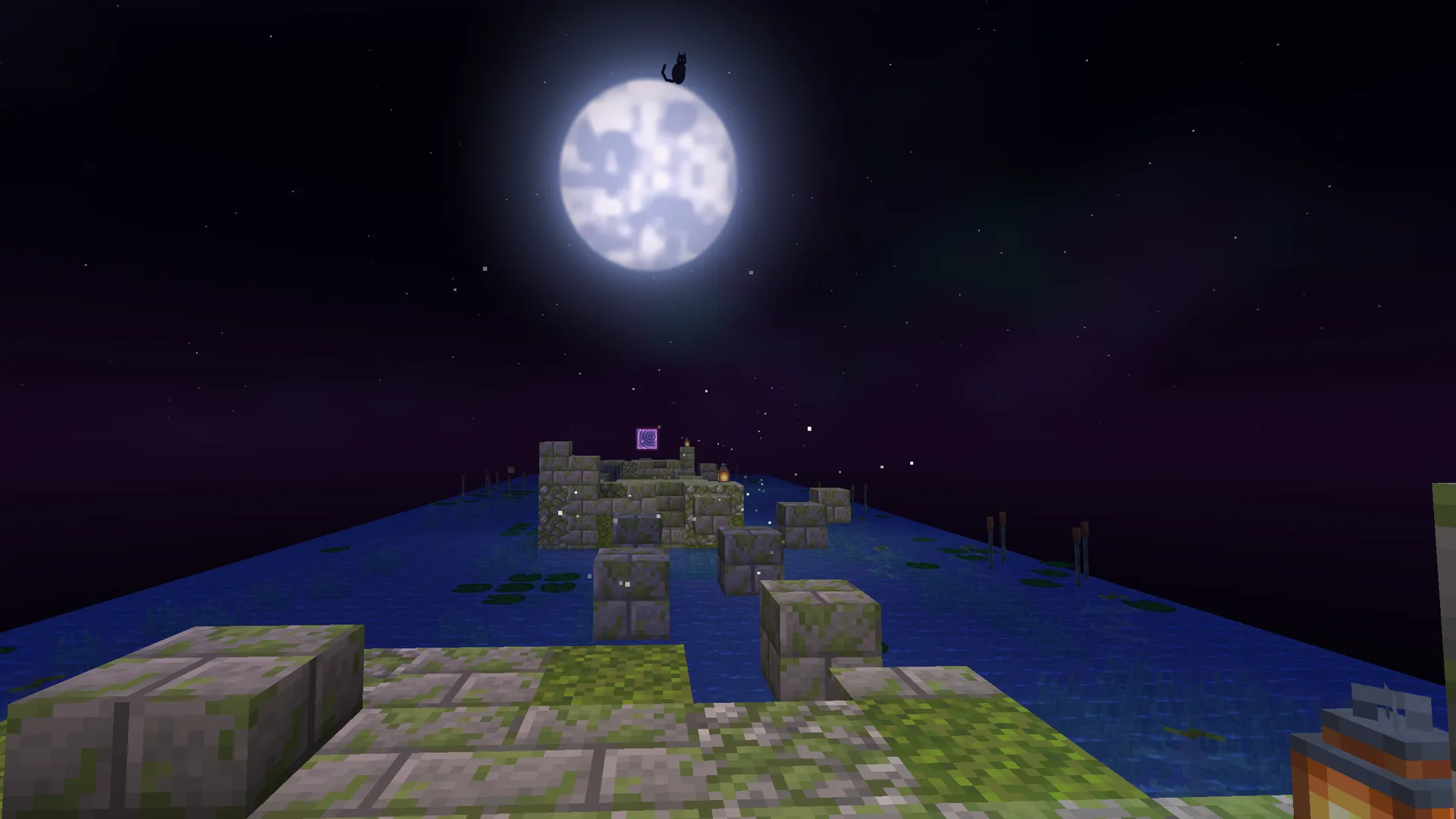
Firefly Lake
A black lake with a path of stepping stones from shore to shore. Fireflies light the path for a few seconds, then it goes dark, and you walk it from memory. Some of the stones you can still see are only reflections and sink when you step on them.
This is the event’s memory game. On the Dream difficulty the fireflies will show the path again if you ask, and a friend standing by the lantern on the shore keeps it lit for the rest of the group. It was retuned after launch, when fast landings on the stones were found to be judged too harshly.
Shader. The fireflies themselves are a shader, drifting over the water along the path while it is lit. The moon hangs over the lake as it does over Ulthar.
Mirror Hall
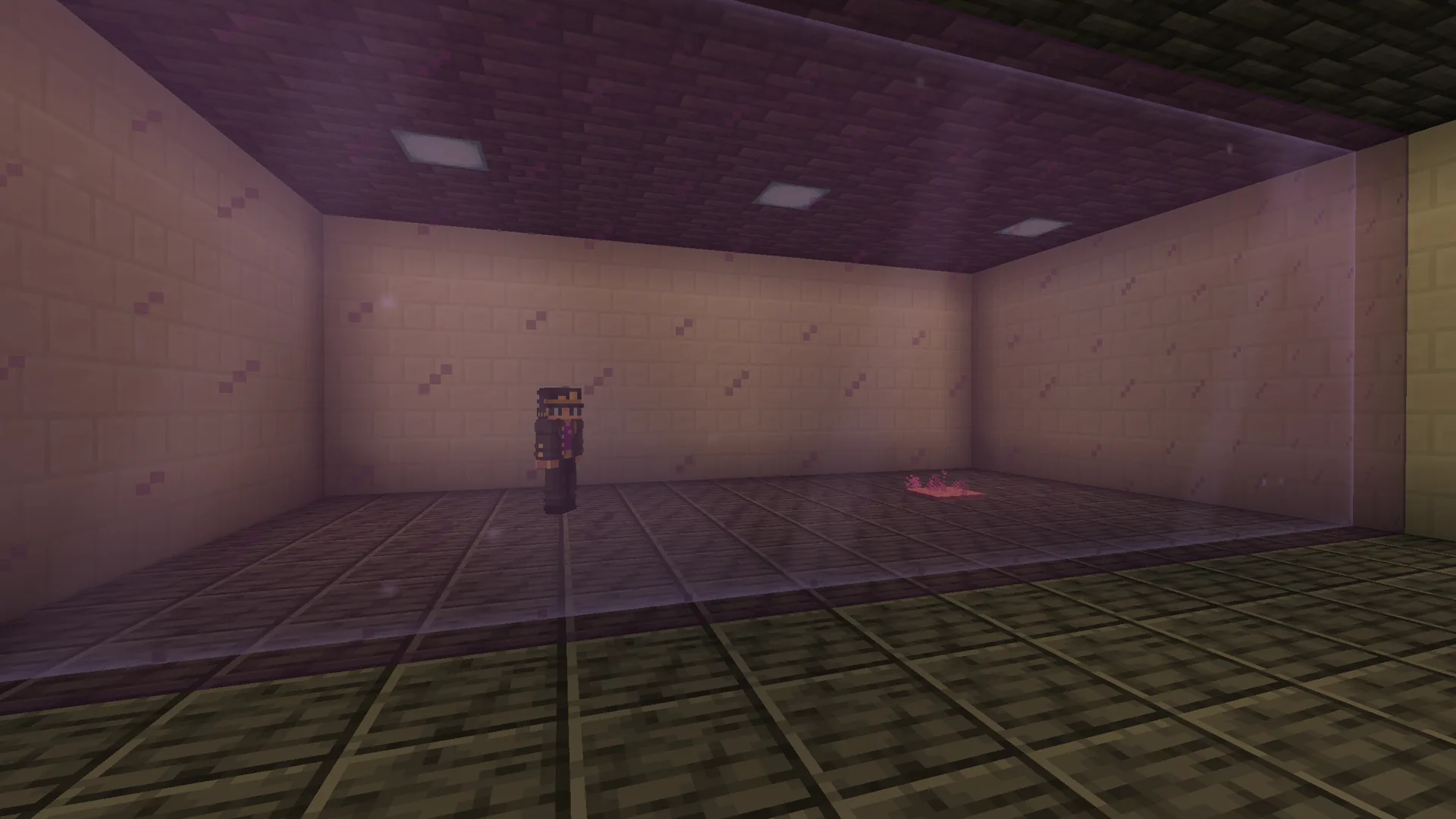
A line of glass divides each of six rooms, and behind it stands your reflection, wearing your own skin. It walks when you walk, but the mirror way, and the walls on its side of the glass are not the same as the walls on yours. Each room opens when you and your reflection stand on your plates at the same moment.
Mirror Hall is a pure puzzle with no timer and nothing to dodge. It began with four rooms. The step from the third to the last proved too steep in testing, so two rooms were added in between, and each of the six now teaches one idea before the final room asks for all of them.
Shader. The glass that divides each room is drawn by a shader, and it flashes when a room is solved.
The Toy Box
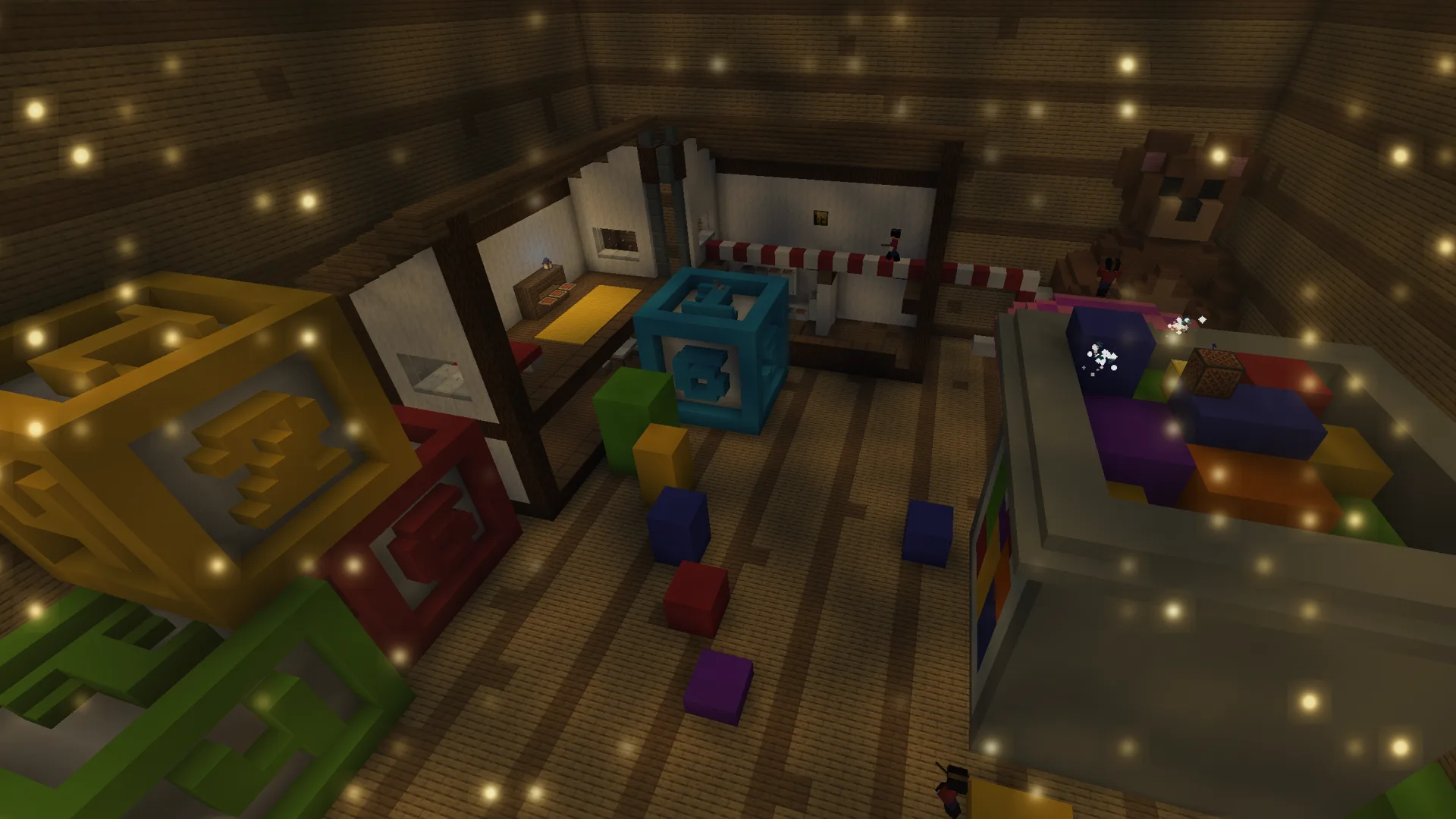
You are tiny, in a nursery the size of a cathedral. The way up runs over toy blocks, along a bookshelf, down a toy train track and across a dollhouse roof to the music box on top of the wardrobe. Wind-up soldiers march their rounds along the route, and a touch winds you back to the last toy. When the music box plays, they slow down.
The Toy Box ends the night on a climb, after two dreams of standing and thinking. It uses the same shrinking as the Library, turned from a tool into a setting.
Shader. When the music box plays, its tune is shown as well as heard, washing across the screen.
Deeper Slumber
The last night takes its name from the Gate of Deeper Slumber and follows the road from the books, down the stair and through the Gate, to the Dreamer itself.
The Windswept Isles
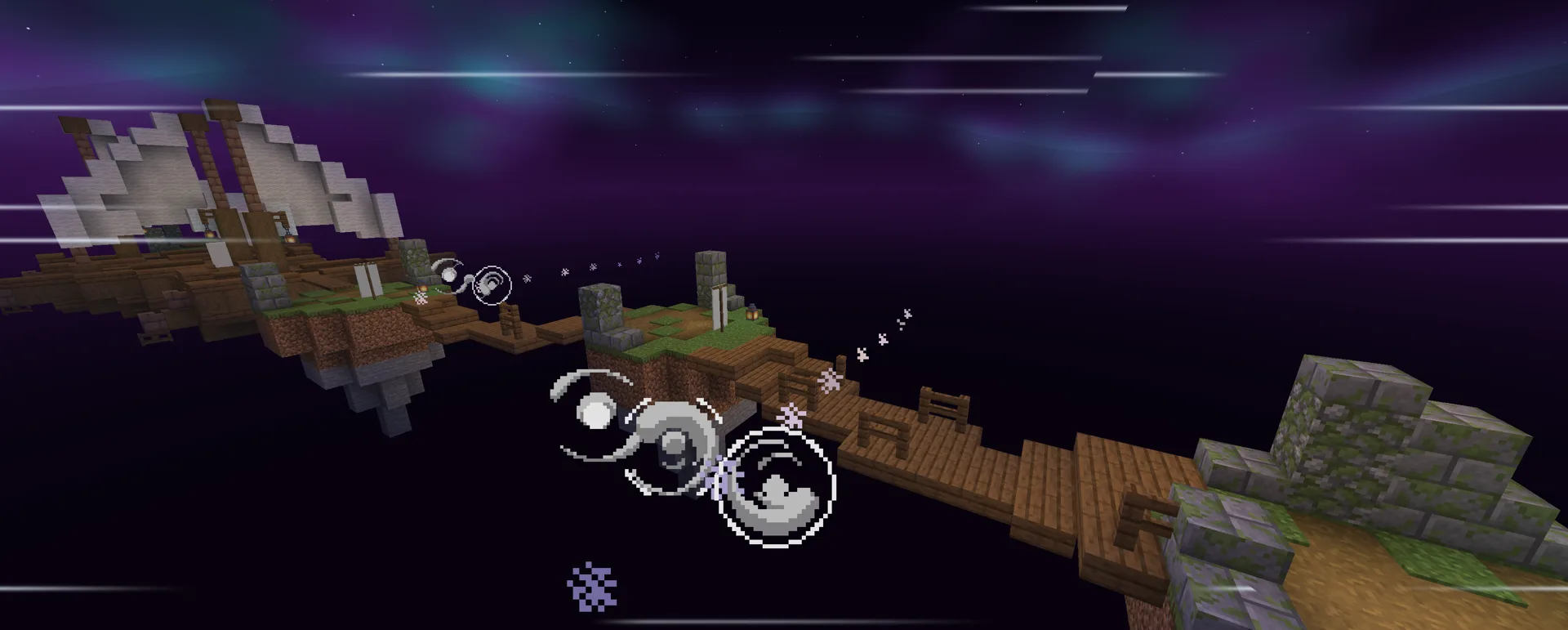
Floating islands joined by narrow plank bridges. The wind comes in gusts on a steady rhythm, from one side and then the other, and pushes you toward the edge while it blows. Sneak to brace against it, or wait behind a wind-stone.
The Isles are the last plain parkour of the event and the only dream whose danger you cannot see. Banners, sound and the bar at the top of the screen warn of each gust instead. The gate of a city in the sky stands on the last island. Readers of Lovecraft’s Celephaïs may think of Serannian, the cloud city where the sea meets the sky.
Shader. Every gust streaks across the screen from the side it is blowing from. This is the main way to read the wind, and the banners and the sound back it up.
The Seventy Steps
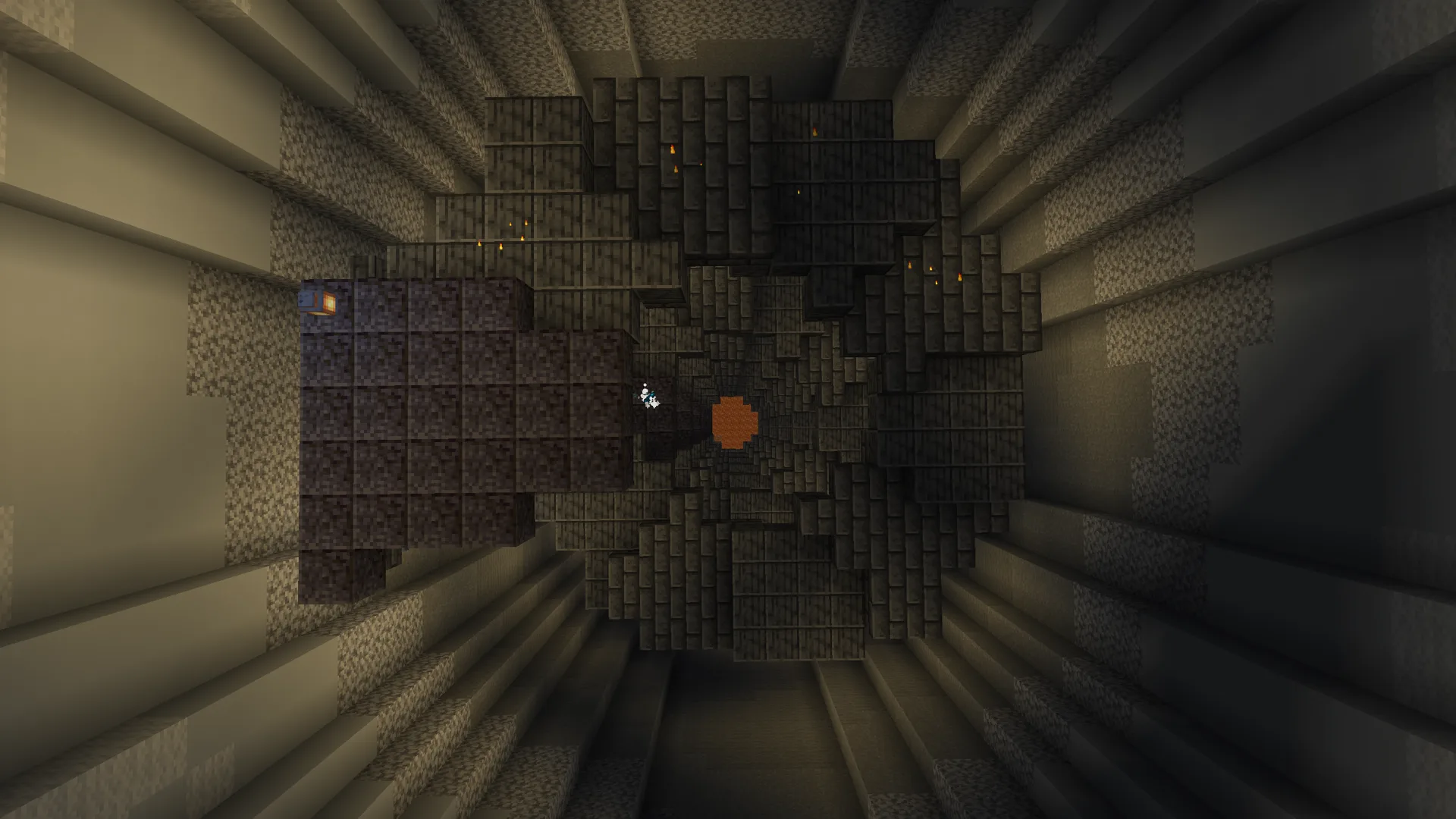
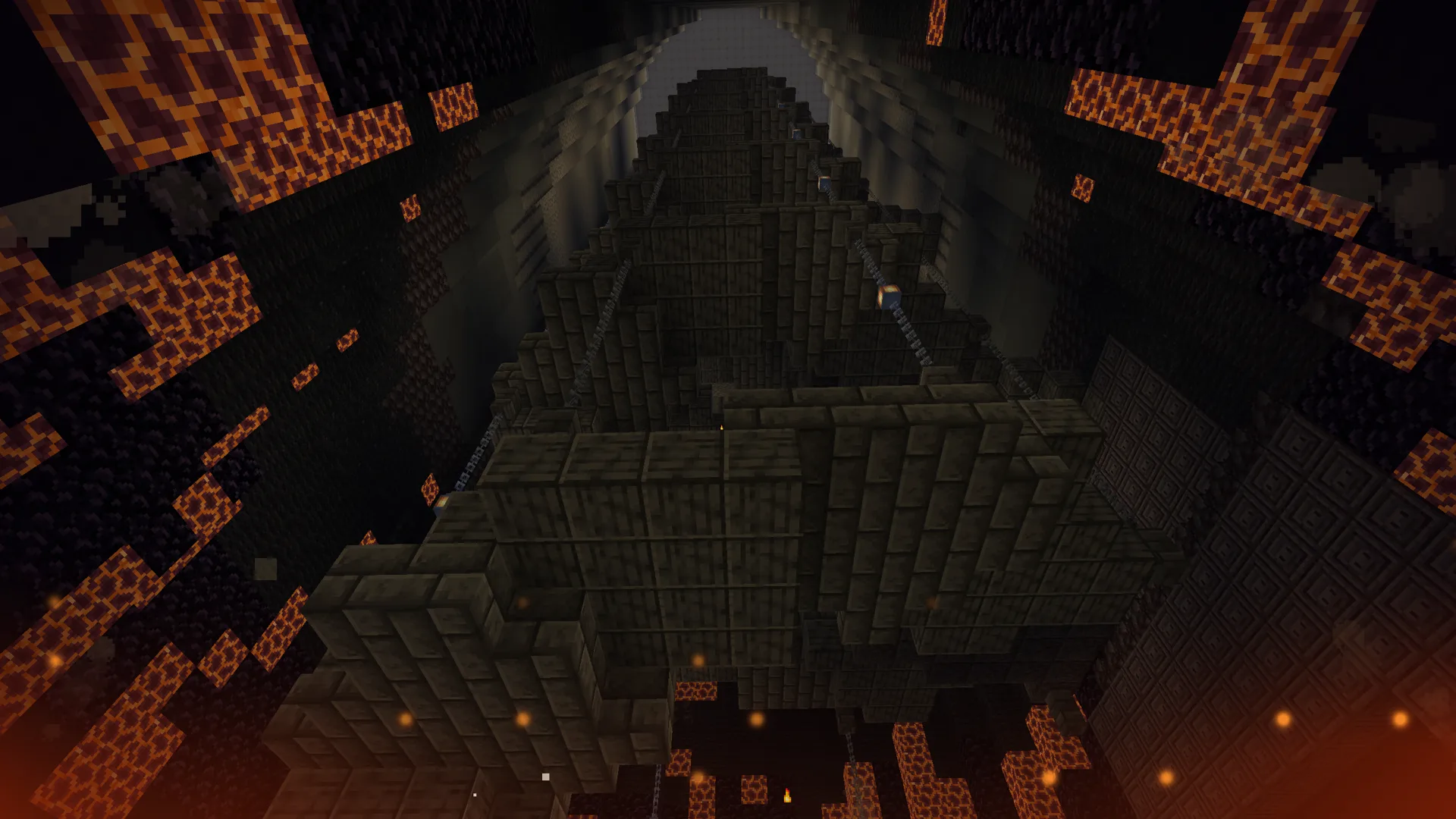
A spiral stair winds down into flame-lit dark, ten steps to a lap, with a landing every lap. Between the landings the steps crumble and return on a beat, and embers drift down the true way.
In the Dream-Quest, Carter goes down the seventy steps of light slumber to a cavern of flame, and from there down seven hundred more to the Gate of Deeper Slumber. The event keeps the seventy, the flame and the Gate.
Shader. The dark closes in around the edges of the screen the further down the stair you go, with embers glowing below, so the descent feels deeper than the blocks alone could make it.
The Gate of Deeper Slumber. The Gate at the bottom of the stair only opens for dreamers carrying 20 Dream Fragments from the difficulty they are playing. A group’s fragments are added together. If you are short, the Gate asks for 3 fewer for every 10 minutes you wait at it, so nobody is stuck for good. The Gate is the reason fragments are hidden in every dream. It makes sure nobody reaches the end of the event without having looked around on the way.
The Eye of the Dreamer
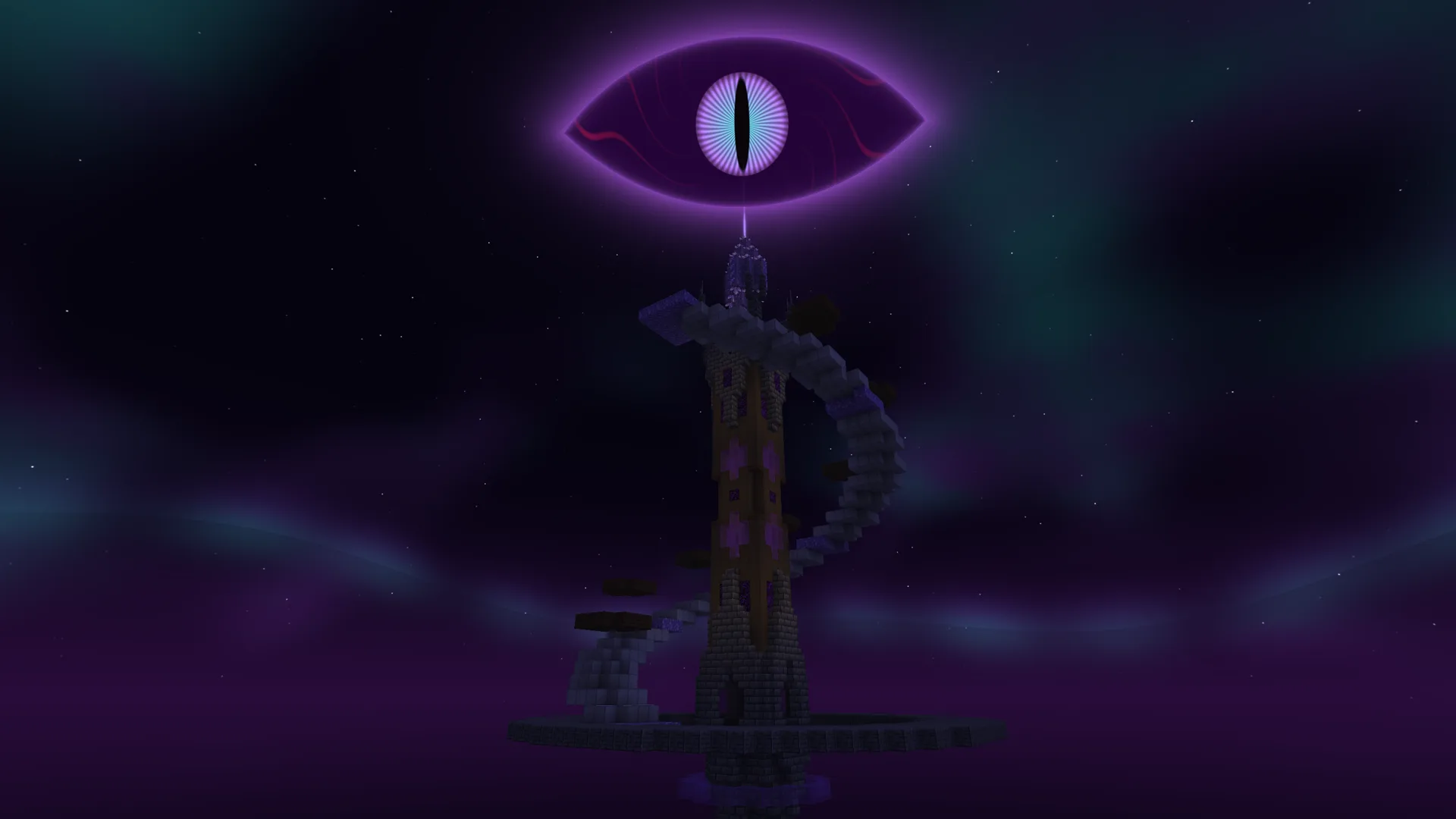
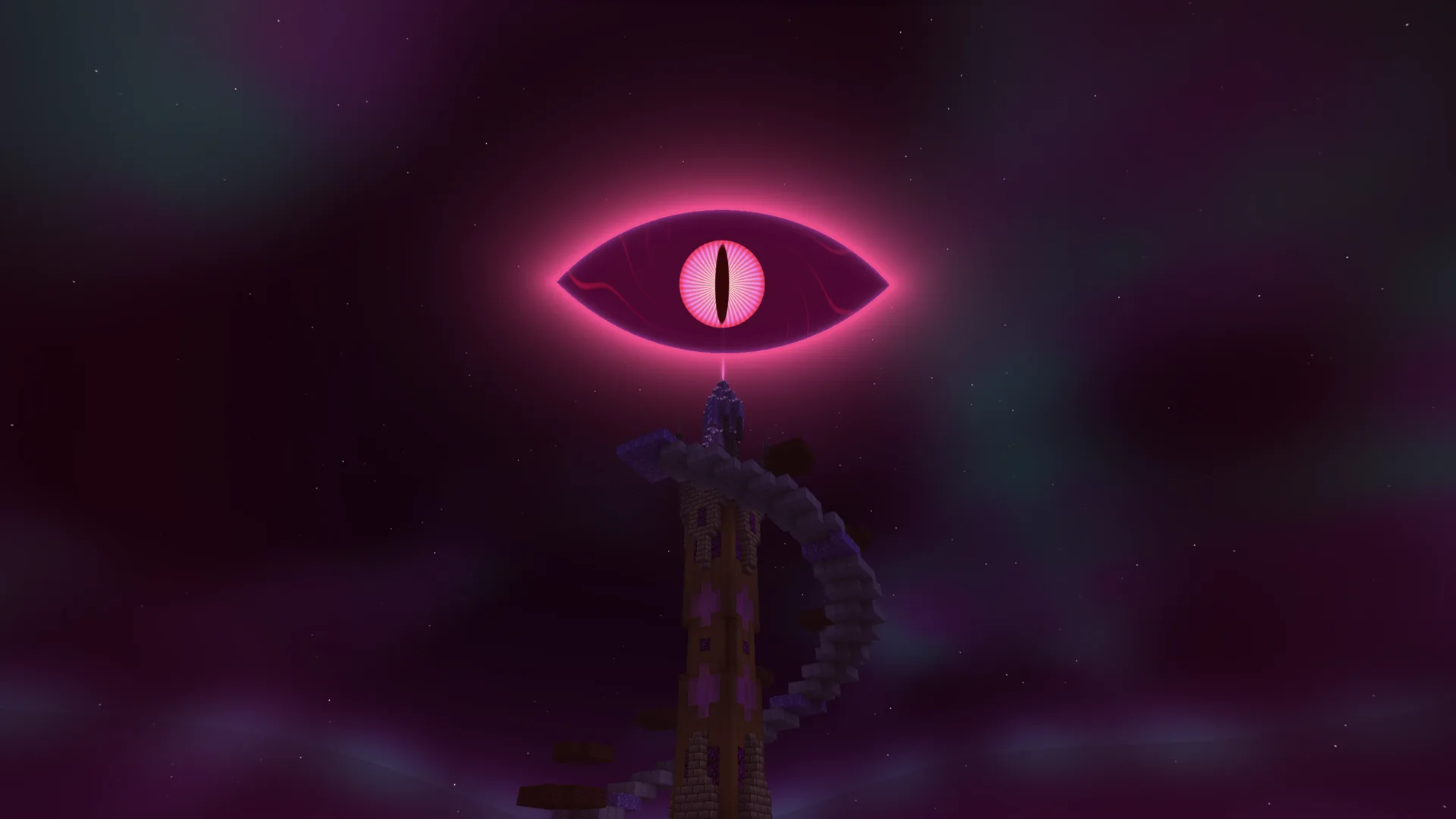
Beyond the Gate, a spiral of platforms climbs around a tower toward a vast eye hanging in the sky. Move while the eye is shut. When it opens, be still or be hidden, or it sends you back down.
The eye has been watching since the first night, from the face of the clock tower and from between the streets, and the event’s whole road leads to it. It was the last dream of the very first version and is still the last. Reaching the top ends the fifth night.
Shader. The eye is the event’s largest effect. It hangs in the sky above the tower, shut to a glowing slit and then opening, and its pupil turns to whoever is looking at it. When it catches someone it flares red and shuts. At the top it opens wide, flares and fades, and that is the moment you wake.
Hints, skips and medals
On the Dream difficulty, hints appear if a dream is taking you a while or has sent you back several times, and after about five minutes in one dream you are offered the choice to skip it with /dream skip. The harder difficulties give less help, and their dreams can’t be skipped.
Each night is timed and ends with a Gold, Silver or Bronze medal. These are the times to beat on the Dream difficulty. A Nightmare allows 15% more time and a Night Terror 35% more.
| Night | Gold | Silver |
|---|---|---|
| The Falling | 3:30 | 6:00 |
| The Quiet Rooms | 6:40 | 11:00 |
| The Watchers | 5:00 | 8:30 |
| Reflections | 6:00 | 10:00 |
| Deeper Slumber | 4:00 | 7:00 |
Playing with friends
The event was planned from the start as something to do together. Every dream can be finished alone, and most have a second way through that only a group can use. One player holds a lever while the others cross. One watches the statues. One stands by the lantern. One draws the eye so the rest can climb. The solo route is always there, and it is always the slower one.
- Open /dream and click Friends to see who is online and invite them.
- A group holds up to 4 dreamers, so you can invite up to 3 friends. An invite lasts 5 minutes.
- A group shares what its members find inside a dream, such as the Library’s pages and Ulthar’s cats, and its Dream Fragments are added together at the Gate.
- The Friends page shows where each friend is dreaming, with a button to join them.
- If someone in your group logs off, their place in the group is kept for 15 minutes.
Clans
If you are in a clan, the Friends page has a Dream with your clan button. Clanmates can join each other’s dream group without an invite.
The shards your clan’s members earn from Dream Fragments are added up on the Top clans leaderboard.
Difficulty
There are three difficulties. Pick one from Difficulty in the menu before you fall asleep. Each has its own medals, leaderboards and set of Dream Fragments.
| Difficulty | How it opens | What changes |
|---|---|---|
| Dream | Open to everyone. | The dream as it was made, with checkpoints, hints and the option to skip. |
| Nightmare | Finish all five nights in a Dream. | Faster and sharper, with less help. |
| Night Terror | Finish all five nights in a Nightmare. Your realm’s Dream Meter must also have reached 50%. | No checkpoints, hints or skips. One mistake restarts the night, and your own shadow walks your path 12 seconds behind you. If it reaches you, the night starts again. |
The event launched in testing with one difficulty. It was meant to be something any player of any age could finish, and it still is. Then a tester went through all five nights in 21 minutes with a Gold medal on each. Making the Dream harder would have shut out everyone else, so the harder versions were added on top of it.
The Night Terror’s shadow exists for a reason. Most dreams can be made safe by standing still and waiting for the right moment. The shadow takes that away. It walks exactly where you walked, twelve seconds later, so every pause has to be paid back.
Dream Fragments and shards
Dream Fragments are hidden in every dream. Walk into one to collect it. Each difficulty hides its own set of 59, and Fragments in the menu shows how many you have found in each dream.
Fragments pay out in two kinds of shards.
| Difficulty | Each fragment pays |
|---|---|
| Dream | 1 shard |
| Nightmare | 1 shard and 1 nightmare shard |
| Night Terror | 3 nightmare shards |
Collecting again. A fragment you have already found pays its shards again once each day (days change at midnight UTC). These repeat finds are capped at 100 shards and 150 nightmare shards a day. First finds always pay in full and don’t count toward the cap. Only first finds count on the leaderboards.
The Dream Meter
Each realm has its own Dream Meter, shared by everyone on it. Every fragment found adds to it, and there is a limit to how much one player can add in a day, so a realm fills its meter together over several days rather than a few players filling it in an afternoon. A message goes out to the realm at every 10%.
| Meter | What happens |
|---|---|
| 25% | Daily twists begin. From then on each day’s dream has a twist, such as moving faster, jumping higher or a fog that closes in. |
| 50% | The Night Terror opens for anyone who has finished a Nightmare. |
| 75% | The Dreamer stirs in its sleep. |
| 100% | The Dreamer is about to wake. Staff announce the Awakening, and the Dream Shop opens on that realm. |
The dream is a separate place on each realm rather than one shared event server. Players stay on their own realm, with their own friends and clans, and each realm wakes its own Dreamer.
The Awakening
The Awakening is the event’s finale, played once on each realm by everyone at the same time. It lasts about fifteen minutes and has four acts. The basics are below. What happens in each act, and how it ends, is in the closed box at the end of this section for those who want to read it.
- Staff start it once a realm’s Dream Meter reaches 100%, at a time announced beforehand.
- The sky over spawn tears open and a five-minute countdown runs in chat. When it ends, everyone online on the realm is pulled into the dream together, whether they have played the nights or not.
- It grows and shrinks with the crowd, so it plays as well for a handful of players as for a full realm.
- When it is over, everyone wakes at spawn. The dream stays open afterwards and the nights can still be played.
The finale was rebuilt from nothing late in development. The first version was three short group games, and the few staff members who tested it found that it had little to do with the nights before it. The version that shipped uses what players did during the event, and it answers the question the event has been asking since the first night.
If you missed it. Players who have finished all five nights but weren’t there can play the Awakening later. Type /dream awakening, or use the Awakening button in the menu, to join the queue. A replay starts 15 minutes after 3 dreamers are waiting, and more can join during the wait.
Mystery cosmetic. Finish all five nights and take part in an Awakening, live or as a replay, to receive a free mystery cosmetic. It doesn’t matter which you do first.
Act by act
Spoilers. The four acts and the ending. Open this only if you have played the Awakening or don’t mind knowing.
The tear. For five minutes a crack grows across the sky over spawn, and it can be seen from every world on the realm. Pieces of sky fall out of it, and inside it a great shut eye glows. When the countdown ends, everyone online drops through it together, down the same fall that began the first night.
Act 1, the last night. Everyone lands in one city. Every dream has run together into a single place, a plaza floating in the dark with districts reaching out from it like spokes, each behind a tall gate with its dream’s name over it. Each district is a short version of a dream, played with what that dream taught. There is flipping gravity on the Inverted Street, freezing under the Eye, reading the dark in the Echo Caves and keeping to the shadows in the Night-Gaunts’ Yard. The number of districts grows with the crowd, from three for a handful of players up to eight. Players choose the ones they are best at. When enough dreamers have come through a district it is marked as remembered, breaks apart and falls away. When the last one has fallen, the city is gone.
Act 2, the pieces. Below where the city hung lies a huge dark outline cut into squares. Every Dream Fragment a player found during the event is now a glowing piece in their hands, called a Piece of the Dreamer. A piece placed on a dark square fills it in. Whoever found more fragments builds more of the picture, and players who never dreamed at all are given pieces from a shared pool, so everyone helps. At first the picture looks like nothing. As it fills, people start to see what they are standing on.
Act 3, the eye. Over the finished picture the Dreamer’s eye opens in the sky, the same eye as the last dream of the fifth night, and with the same rule. Move while it is shut. Be still when it opens. This time the whole realm plays it at once. One last piece lies at the edge of the picture and has to reach the middle. It is too heavy for anyone to carry far, so it is passed from hand to hand. Anyone the eye catches moving is turned to stone where they stand, like a statue in the Gallery, until a friend touches them free. When the piece comes home, the eye breaks apart and falls into the picture.
Act 4, the reveal. Everyone is lifted high into the air as the sun comes up, and from there the whole picture can be seen at once. It is a face. Every square of it is made of smaller faces, and each small face is the face of a player, taken from their own skin. Everyone who dreamed during the event is in it, along with everyone who came to the finale. Its eyes light up, and the words appear on screen.
You were all the Dreamers. Every face down there dreamed it.
Waking. Everyone wakes at spawn with their eyes still shut, and they open slowly into light. The tear in the sky closes in gold, fireworks go up, and the credits are read out to the whole realm. They name everyone who took part, the players who remembered the most districts, placed the most pieces, freed the most statues and carried the last piece home, the finders of the most Dream Fragments, the top clan, the fastest dreamer through all five nights, and the player who added the last point to the Dream Meter. Each player can also read a page about their own dream.
Shaders. The finale has its own set. The tear is a blocky crack that grows across the sky for the whole countdown and stays open, breathing, until everyone is awake, when it zips shut in gold and a gold ring spreads over the sky. The eye over the face glows, and its iris turns to whoever looks at it. A player caught by it sees stone creep in over their screen, and colour floods back when a friend frees them. At the reveal the eyes of the face light up in purple, and the waking is drawn as eyelids opening, warm red through the lids, a flutter, a blink, then light.
Afterwards. The Dreamer is awake, and the dream changes with it. Its night sky turns to a golden dawn, except in the dreams whose darkness is the puzzle. The nights stay open and can be played as memories of the dream, and the leaderboards are frozen as the realm’s Hall of Fame.
The Dream Shop
The Dream Shop is where shards are spent. Open it from Shop in the menu while you are awake. It opens on each realm once that realm’s Dream Meter is full.
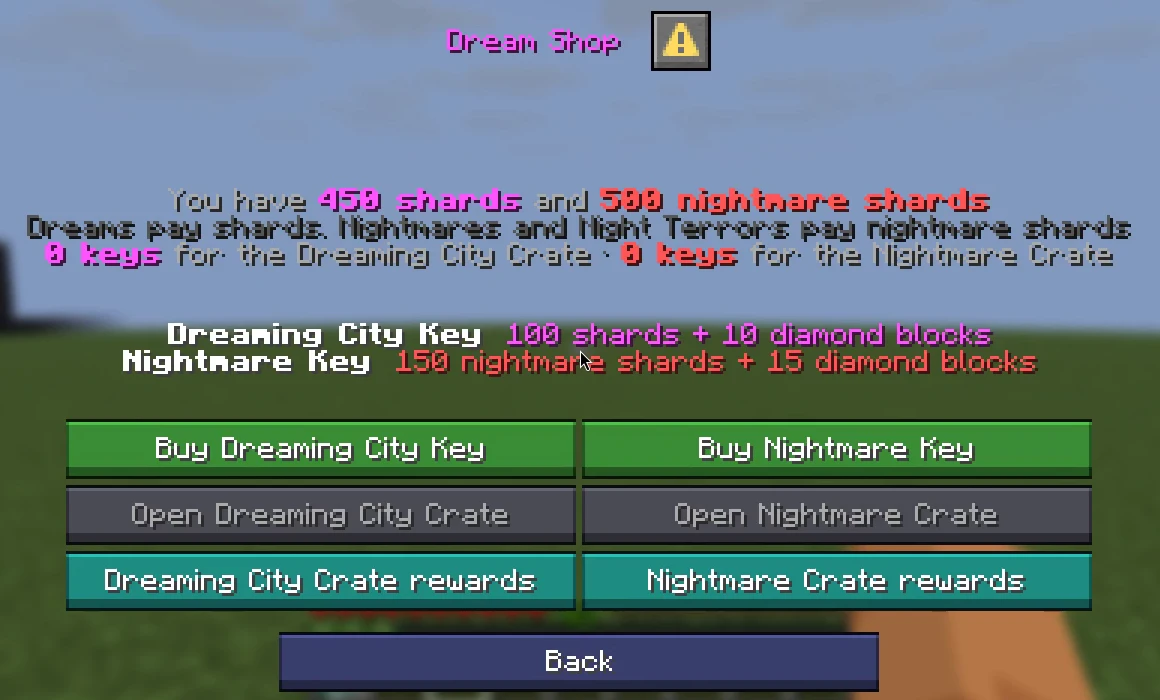
The shop sells two keys. There is no limit on how many you can buy.
| Key | Price | Opens |
|---|---|---|
| Dreaming City Key | 100 shards and 10 diamond blocks | Dreaming City Crate |
| Nightmare Key | 150 nightmare shards and 15 diamond blocks | Nightmare Crate |
The diamond blocks are taken from your inventory when you buy. Keys are held for you on the server rather than given as items, and both crates are opened from the shop page itself with the Open buttons. Each opening uses one key.
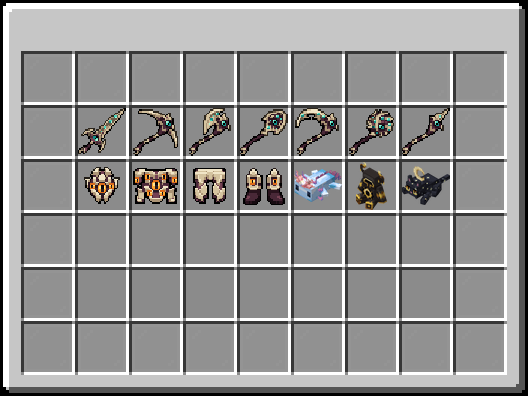
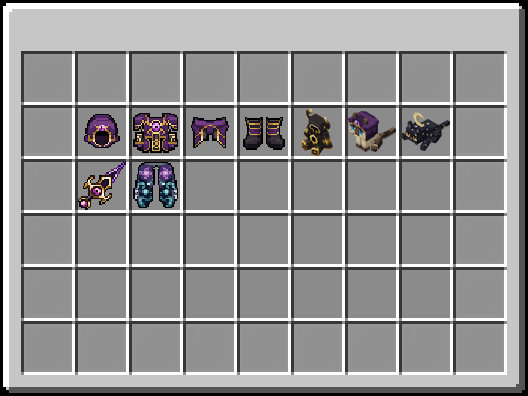
The rewards button next to each crate shows everything it can give and the chance of each item. The cards below show the same thing.
Dreaming City Crate
The Dreaming City Crate holds the Watcher set. Most openings give one of its seven tools and weapons, at 10.77% each. The four armour pieces are 5.4025% each, and the three plushies are the rare pulls, from 2% down to 0.5%. Hover over or tap an item on the card to see it and its chance.
Nightmare Crate
The Nightmare Crate holds the Acolyte armour, at 23.95% for each of its four pieces, and three plushies at 2% and 1%. It is also the only place to find the event’s two Ultra Legendaries, the Eye of the Dreamer Blade and the Wings of the Dreaming, at 0.1% each. They have no special abilities.
Kadath
Kadath is the game after the nights, for dreamers who have finished all five as a Night Terror. Where the nights borrow places from the Dream-Quest, Kadath is its last chapters played through. You are Randolph Carter at the end of his road.
- It opens once you have finished all five nights in a Night Terror. Until then, the Kadath button in the menu shows which nights you still need.
- Enter with the Kadath button or /dream kadath, alone or with up to 3 friends from your dream group. Everyone who comes along needs to have opened Kadath themselves.
- There is one difficulty, as strict as the Night Terror. There are no hints, and a mistake sends you back to the last checkpoint. Both your time and your falls are counted.
- A clean run takes ten to twelve minutes.
- Reaching the end for the first time gives a special reward and 30 shards. After that, a run to the end gives 5 shards once a day.
The Plateau of Leng
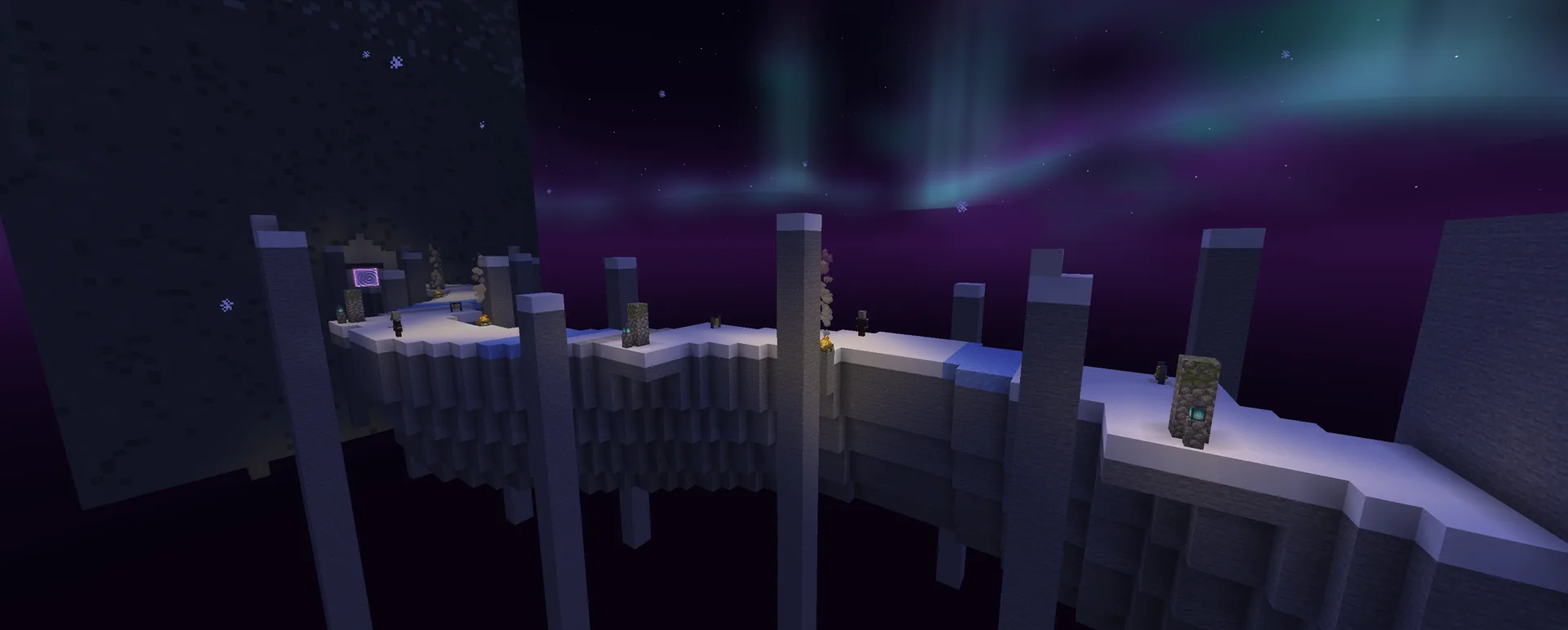
In the books, Leng is a cold and barren tableland at the edge of the Dreamlands, shunned by everyone who knows of it. In the event it is a narrow pass over the void between four stone cairns. Hooded hunters pace across it with lanterns, and the light of a lantern on the snow is exactly what its carrier can see. Snow is quiet to walk on. Ice and frozen bone are not.
It is the Library’s stealth again, turned up, with sound added to sight.
Shader. Tall curtains of aurora stand around the pass in green, teal and violet. When the hunters have heard you, frost creeps in from the edges of the screen, and it melts away once you are quiet again.
The Night-Gaunt Flight
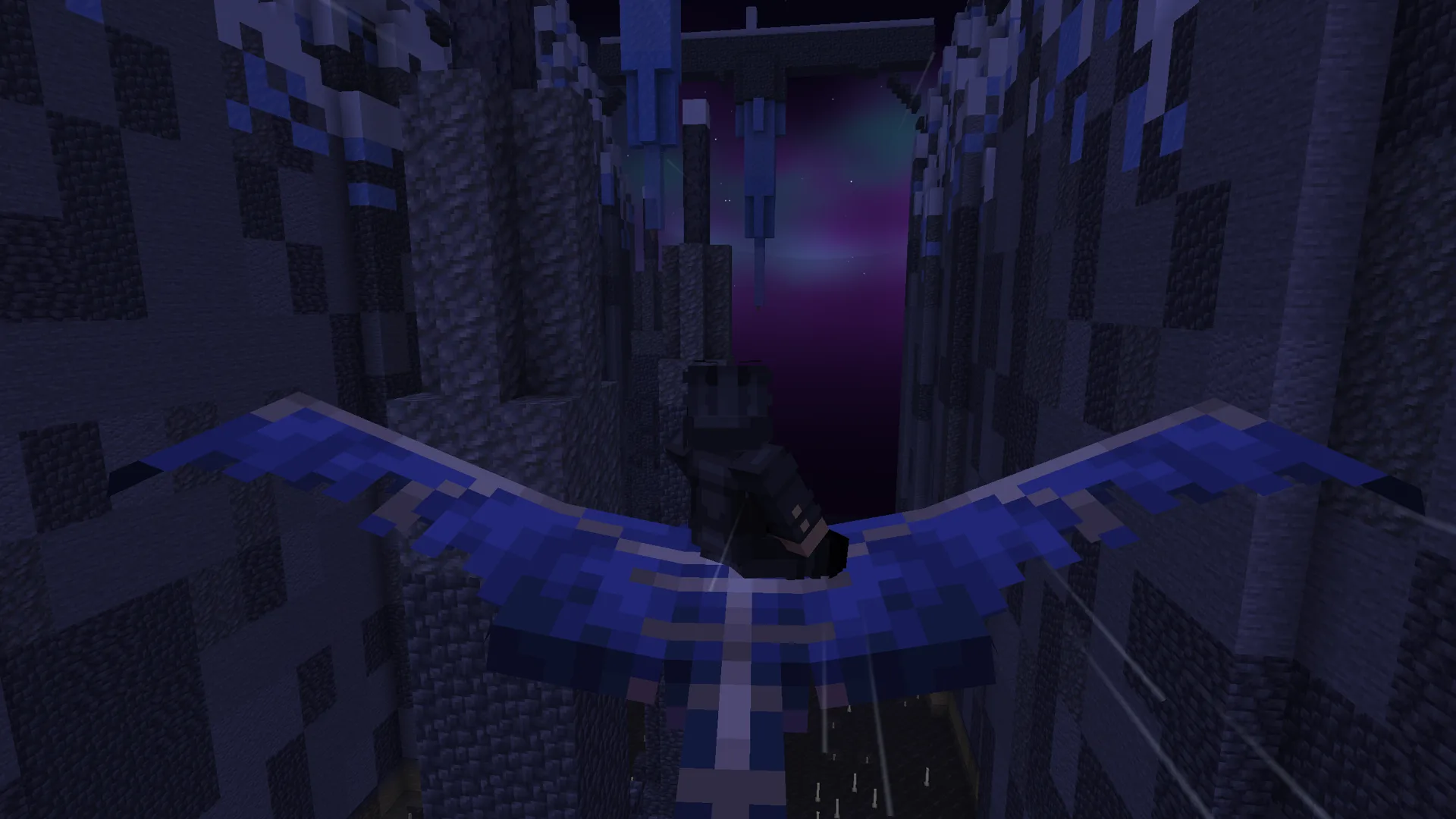
The night-gaunts that hunted you on the second night now carry you, as they carry Carter. You ride on a gaunt’s back down a canyon between the peaks, and it flies where you look. Rock spires, falling icicles and lightning stand in the way, and each gives a moment’s warning before it strikes. Kadath’s mountain, with the castle on its top, closes the end of the canyon and is in view for the whole flight.
Shader. Wind streams past the screen along the canyon, faster when you hurry the gaunt on, and each lightning strike leaves a flash and the bolt’s afterimage.
The Onyx Castle
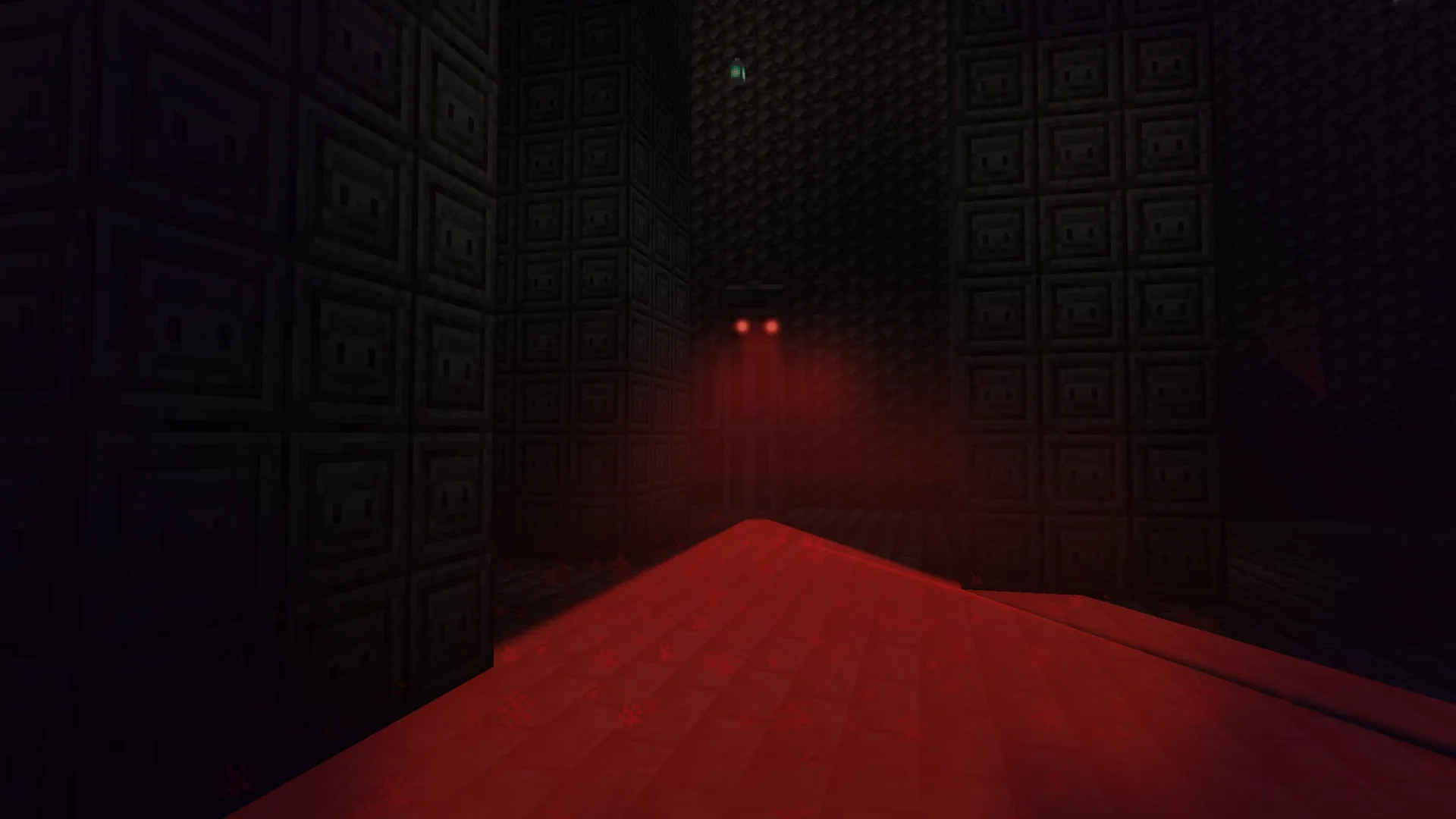
Lovecraft’s castle of the Great Ones is built of onyx on a scale no human could have raised. The event takes that at its word. You cross its halls tiny, as in the Library and the Toy Box, while floors and doors move to a slow drumbeat and giant onyx guards sweep the halls with their gaze.
Shader. Every guard’s gaze is a soft red cone of light from its eyes to the floor, swinging with its head and blocked by the pillars. On each drumbeat a slow violet ripple crosses the floor of the first hall.
Nyarlathotep’s Throne
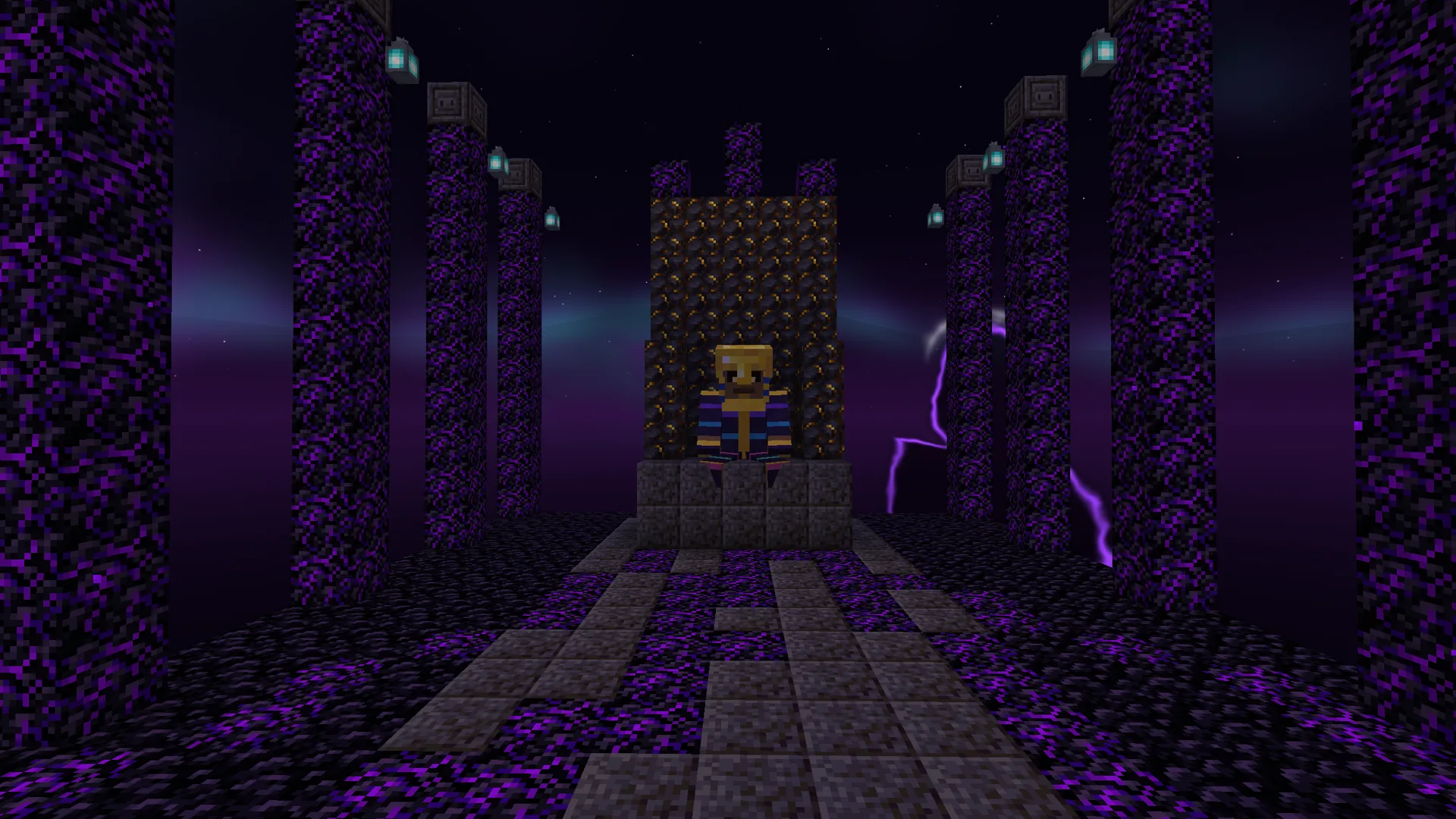
At the end of the book Carter does not meet the gods he came for. He meets Nyarlathotep, the Crawling Chaos, who appears as a tall figure with the young face of an ancient Pharaoh, robed in shifting colours and crowned in gold. He is courteous, he offers Carter his sunset city, and he is lying.
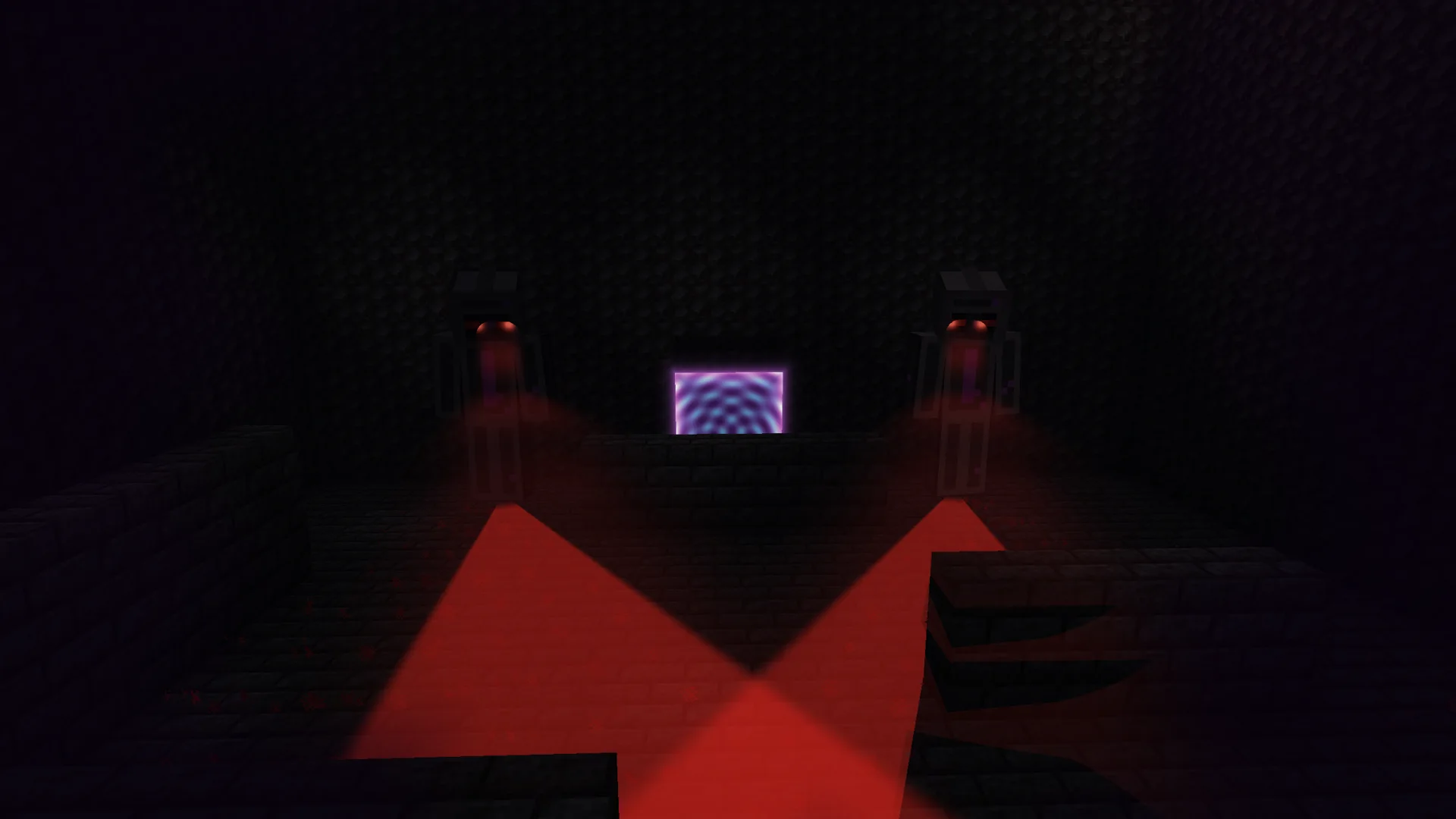
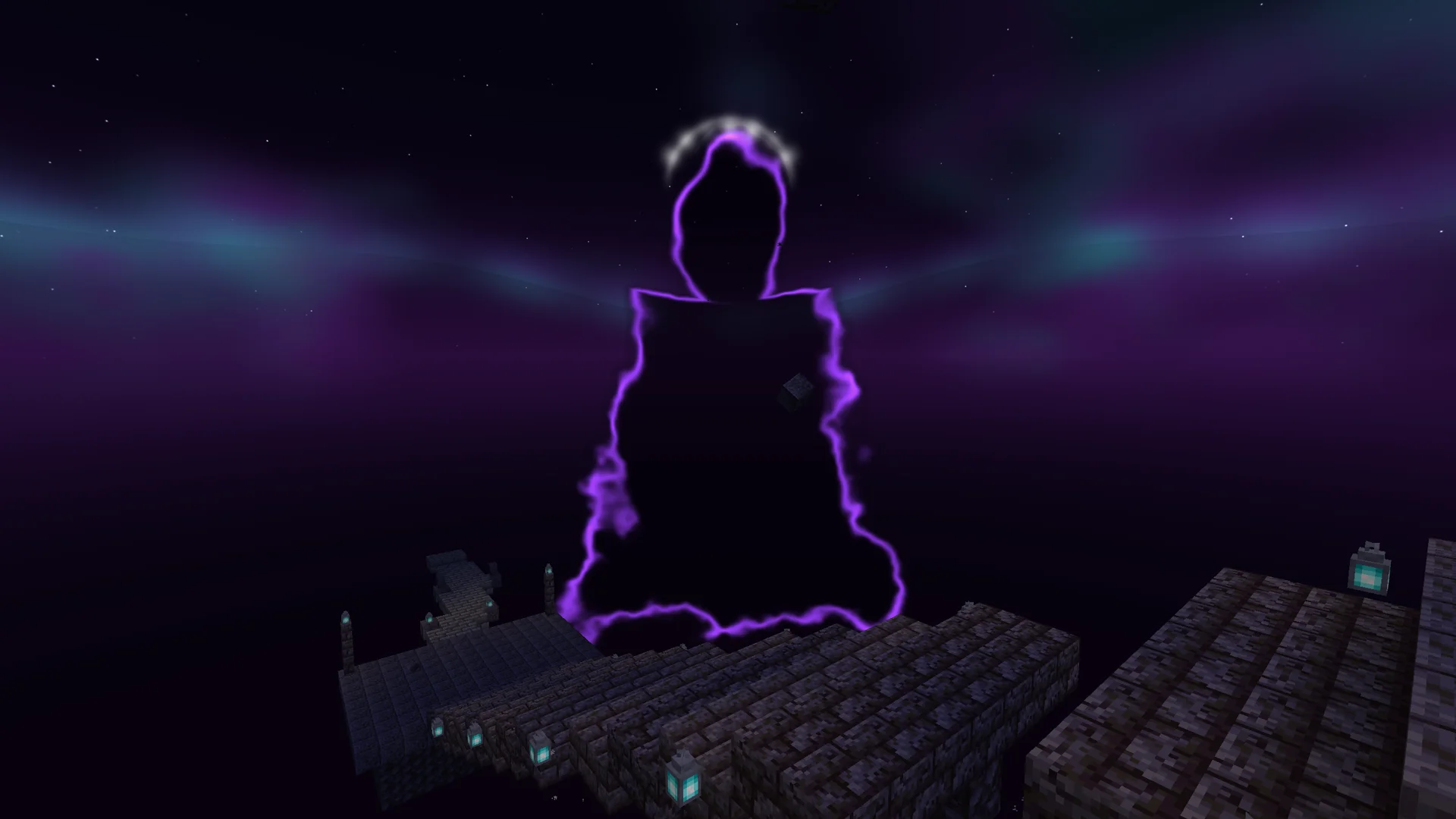
The event’s last stage is built the same way. Nyarlathotep sits his throne as Lovecraft describes him and makes his offer. Then the hall comes apart, and the rest is a run.
Shader. Behind the throne room’s faceless watcher stands a vast soft shape of smoke with a pale crown of light over it. At the end, warm sunset light spills out of the golden gate.
Leaderboards and medals
Open Leaderboards in the menu, or type /dream top.
| Board | What it shows |
|---|---|
| All five nights | The top ten dreamers by their five best night times added together. There is a separate board for each difficulty. |
| Most shards | Who has found the most shards. |
| Top clans | Shards found by each clan’s dreamers. |
| Kadath | The fastest runs to Kadath’s end. |
A new record is announced to the whole realm. Boards are kept per realm. When a realm’s Awakening is over, its boards are frozen as that realm’s Hall of Fame, so times set afterwards no longer change them.
Custom shaders
A large part of how the Dreaming City looks and plays on Java Edition comes from custom shaders written for the event.
What they are
A shader is a small program that runs on your graphics card and decides how something on screen is drawn. Minecraft’s resource packs can carry their own, and the CatCraft texture pack does. The event’s effects are part of the pack, so they need no mods and no shader loader. A Java player with pack version 12.8.4 or newer has all of them the moment they type /dream.
Why the event uses them
Blocks and particles can build a place. They cannot change the sky, bend a hallway, put a beam of light through the air or draw across the whole screen. Dreams do all of those things, so the event needed another tool.
Shaders are used in three ways.
- To make a place feel like a dream. The whole dream sits under its own night sky. Doorways ripple like water. Falling asleep and being woken are things you see happen to the screen.
- To show a dream’s rule. In many dreams the shader is the clearest signal of what is going on. The beam on the Inverted Street shows which street is being watched. The cones of light over the Night-Gaunts’ yard show where it is safe. The shaft of light in the Orrery shows which bridge is open. The echo in the caves is the answer to the puzzle.
- For the moments worth remembering. The eye opening in the sky on the fifth night, and the sky tearing open over spawn at the Awakening, are things that Minecraft cannot normally show at all.
Each effect is described with its dream in The five nights and Kadath. The table below lists them together.
Where they are used
| Where | What the effect does |
|---|---|
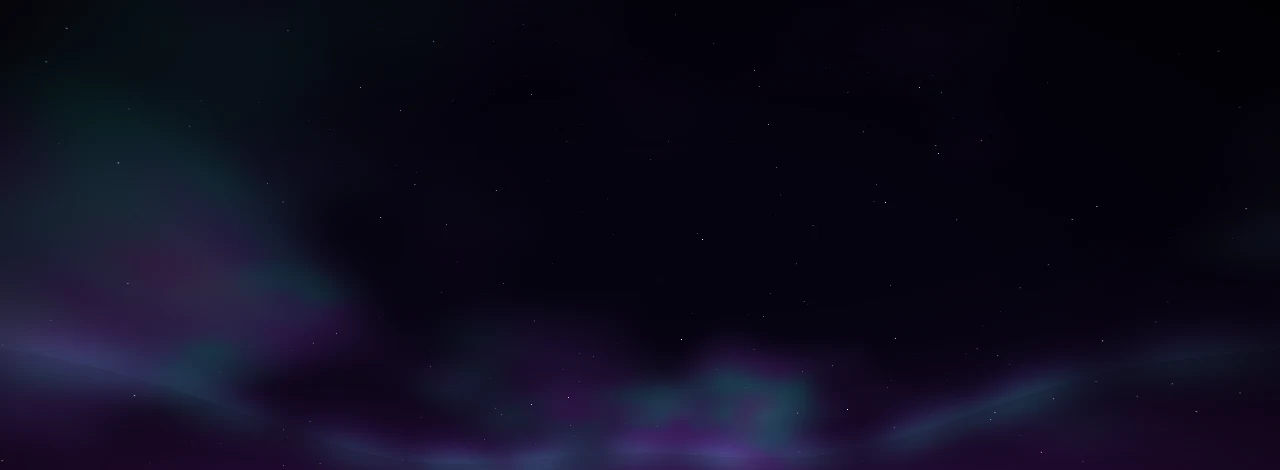
| Everywhere | The dream has its own night sky, a violet nebula with an aurora and stars in place of the sun, moon and clouds. It is dimmed in the dark dreams. |
| Falling asleep and waking | The fall into the dream, the fade from one dream to the next, and the end of a night, when the dream dissolves upward into a starry dark. Whenever a dream sends you back there is a jolt across the screen, like waking with a start. It is violet, and blood red for a Night Terror restart. |
| Doorways | The arch on the Landing and the doors between dreams glow with a moving surface, so the way on is always the brightest thing in view. |
| The Endless Corridor | The corridor warps a little more with each loop. |
| The Inverted Street | The beam of the great eye between the streets, frozen time when the clock is stopped, and the twelve strokes of the clock tower. |
| The Shrinking Library | Ink closes over the screen as you shrink, and candlelight opens it as you grow. |
| Ulthar | The moon with a cat on its rim, the eyes of the lost cats in the dark, and a sea of cloud around the rooftops. |
| The Echo Caves | The echo travelling out through the dark, and the answer coming back. |
| The Night-Gaunts | The searchlights on the rooftops. |
| The Gallery | A heartbeat at the edge of the screen as a statue gets close, and the dark of the third hall. |
| The Orrery | The shaft of a planet’s light on its bridge. |
| Firefly Lake | The fireflies. |
| Mirror Hall | The surface of the glass, and the flash when a room is solved. |
| The Toy Box | The music box’s tune washing over the room. |
| The Windswept Isles | The gusts, which cross the screen from the side they blow from. |
| The Seventy Steps | The dark closing in as you go down, with embers below. |
| The Eye of the Dreamer | The eye itself, which opens across the sky above the tower. |
| The Awakening | The tear in the sky over spawn, and more that is left for the day. |
| Kadath | An aurora over Leng and frost at the edges of the screen, wind and lightning on the flight, the guards’ gaze and the drumbeat in the castle, and the presence and the sunset light in the throne room. |
How they were made
They are drawn to suit Minecraft, with flat colours and hard edges where they sit among blocks, and soft shapes kept for skies, clouds and light.
Many of them were changed after playtests. The great eye at first dimmed the whole screen while it was open. Testers found that tiring, so the dimming was removed. The night-gaunts’ searchlights used to shine straight through the awnings, which made the shadows look unsafe, and they now stop on the roof. The eye’s beam on the Inverted Street began as a line of red particles that a tester took for redstone, and the shader beam replaced it.
Without the pack, and on Bedrock
None of the effects are needed to play. Every dream also says what is happening with blocks, particles, sound and the bar at the top of the screen, so a Java player without the pack sees a plainer dream but plays the same game with the same rules.
Bedrock Edition cannot run these shaders, so on Bedrock each effect has a stand-in made of particles, blocks, screen fades and sound. The beam becomes a line of particles, the doorways become portal particles, and the tear over spawn becomes a layered particle tear in the sky.
The story, explained
This section gives away the ending.
Spoilers. How the whole event fits together. Open this only if you have played the Awakening or don’t mind knowing.
From the first day, players are told two things. Beneath the realm drifts a city built from every dream ever dreamed there, and its Dreamer is stirring. They are asked to wake it. They are never told who it is.
The answer is in the first of those two sentences. A city made of every dream dreamed on the realm was dreamed by the people of the realm. The Dreamer is not a monster under the world. It is everyone who plays there, and the finale shows this in the plainest way it can, with a face built out of their faces.
Almost everything in the event leads to that moment.
The fragments. Dream Fragments look like a collectable and a currency, and they are both. They are also the Dreamer, in pieces. The Gate on the fifth night asks for them, so dreamers arrive at the end carrying them. In the Awakening every fragment a player found comes back as a piece in their hands, and those pieces are what the face is built from.
The Dream Meter. The meter cannot be filled by one player. Each person can add only so much in a day, and the realm has to fill it together. The credits say how many dreamers woke it together, and they name the player who added its last point.
The dreams. The fifteen dreams seem to have nothing to do with one another. The first act of the Awakening puts them in one city, side by side, and asks for the skills they taught. Then it lets them fall away one at a time, each marked as remembered, until only the fragments are left.
The Eye. The eye is there from the first night. It looks out of the face of the clock tower at the end of the Inverted Street and sweeps its light between the streets. On the fifth night it hangs over the tower, and climbing to it wakes you. In the Awakening it opens one last time over the finished face and the whole realm plays its rule together. When the last piece is carried home, the eye falls into the face and becomes part of it.
The statues. The punishment in the third act is the Gallery’s. Players caught by the eye turn into statues, and the cure is another player’s touch. The finale is built to be played together.
The fall and the waking. The event begins with a fall out of the waking world, and the Awakening begins with the same fall, taken by everyone at once. It ends with eyes opening at spawn. After that the dream is no longer dark. It is golden, and its nights are called memories.
Kadath. Kadath stands a little apart, as the road for those who want to go further than the nights. It ties the event back to its source. The nights borrow places from Randolph Carter’s journey, and Kadath is the end of that journey, with echoes of the nights along the way. The night-gaunts that hunted you now carry you, the castle is crossed at the Library’s size, and the stair in the throne room falls into the same blackness as the Endless Corridor.
Development
From five dreams to fifteen
Most of the event was made by DarkChroma, CatCraft’s owner, who designed it and made its games, puzzles and shaders. Xizzdot did the builds, and a few staff members helped test.
Work began earlier in 2026, and the event was rebuilt several times before it opened.
The first playable version had five dreams in a single run. A playtester finished it in five minutes. The run was split into nights and ten more dreams were designed to make the three-a-night shape the event has now. The three difficulties came next, then the Dream Meter and the finale, then Kadath, and last the shop and its crates.
Not everything survived. The upside-down plaza was cut for the Inverted Street. The first finale was replaced whole. A group room called the Dreamer’s Heart, planned for the 75% mark of the meter, was left out because it was not finished to the standard of the rest.
Builds
Every dream was first laid out in plain blocks so that it could be played and tuned before anyone decorated it. All of the finished builds are the work of Xizzdot, CatCraft’s builder, who dressed each dream in place around the parts that move, from the Library’s shelves to the rooftops of Ulthar.
Playtesting
Each dream was played through by a few staff members on a test server before it went near a realm, and their notes decided what changed. One playtest alone produced 24 notes, and every one was dealt with before the next test. Many of the details described above came out of those sessions. The fourth Gallery hall, the extra Mirror Hall rooms, the sliding walls of the Shifting Streets and the light in the Echo Caves all started as something a tester said.
Some changes were about tone rather than difficulty. Early versions filled the middle of the screen with messages for every checkpoint and every cat found. Testers found it noisy, so those moved to a small line above the hotbar, and large titles are now kept for the name of each dream and for real danger.
Alongside them, every dream has an automated run-through that plays it from start to finish, and the whole set was repeated after each change so that a fix in one dream could not quietly break another. The event was also run with thirty players in the dream at once and with a deliberately slow connection, to make sure the timing in dreams such as the Seventy Steps stays fair for players who live far from the server.
Testing did not stop at launch. In the first days the Firefly Lake was retuned, the Dream difficulty was eased in a few places, and gliding through the dreams with a cosmetic elytra was closed off and the records set that way were removed.
Bedrock Edition
Bedrock players play the same fifteen dreams with the same rules and the same leaderboards. Shader effects are a Java feature, so on Bedrock each one has a stand-in made of particles, blocks and screen fades, and the menu and shop have their own Bedrock layout. Dreams that lean on Java-only behaviour, such as gravity in the Inverted Street, work differently under the surface on Bedrock and were tested with a Bedrock client.
A different kind of event
The Dreaming City is the first event of its kind on CatCraft. Earlier events were mostly built around grinding mobs or fighting through mob arenas. This one is fifteen hand-built games with a story that runs from the first night to the Awakening.
It is also the most technically complex thing CatCraft has made. The custom shaders took the most work. They behave differently depending on a player’s video settings, and some graphics cards, mainly integrated ones, showed effects that were never meant to appear. Each problem had to be fixed and tested again on a range of hardware before the event could open.
The puzzles and games took just as much. Every one went through a great many rounds of testing, with a few staff members helping to play them, before it was right.
Most of that work was done by one person, DarkChroma, with Xizzdot on the builds and a few staff members testing. Because of how much went into it, there is no guarantee of another event like this. Players who finished it were asked what they thought, and that feedback will help decide whether CatCraft makes something on this scale again.
Further reading
The stories behind the event are short and free to read online.
- The Dream-Quest of Unknown Kadath. The Seventy Steps, the Gate of Deeper Slumber, the night-gaunts, Leng, the onyx castle and Nyarlathotep.
- The Cats of Ulthar. The town, and its law.
- Celephaïs. A city dreamed into being, and Serannian in the clouds.
- The Silver Key. Randolph Carter, and what it costs him to stop dreaming.